
How to Create Contrast in Your Garden
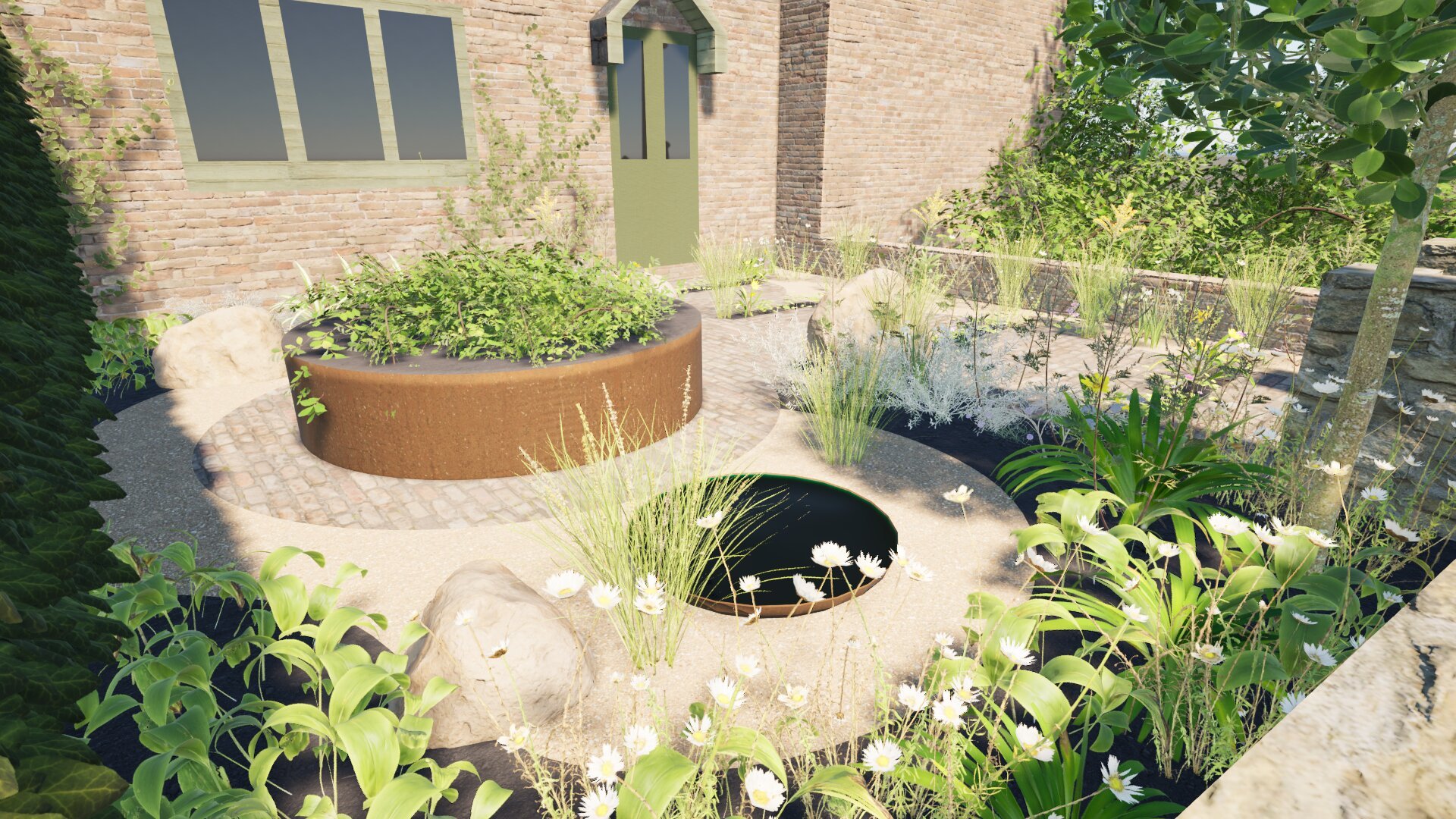
Contrast is one of the quiet forces that gives a garden its energy.
It’s not always something you notice immediately. And you feel it before you can name it. It’s that moment of pause. A shift in atmosphere. The sense that one place is different from the last, even though the materials haven’t changed dramatically.
Without contrast, gardens can feel flat. Pleasant, perhaps, but not memorable. Everything blends into everything else and the eye has no reason to linger. With contrast, the garden gains tension and release. Light and shade. Softness and solidity. Calm and movement.
Contrast is about relationships rather than opposition for its own sake.
Contrast through light, texture and form
One of the most effective forms of contrast is between light and dark. A pale stone path running through deep planting. Silver foliage set against rich greens. A bright clearing after a shaded approach. You get the idea.
These shifts don’t need to be dramatic to work. Often, the most restrained contrasts are the ones that stay with you.
Light
Light behaves differently in each space. It catches leaves, glances off water and sinks into shadow. When we design for contrast, we’re designing for how light moves through the garden over the day and across the seasons.
Texture
Texture plays a similar role. Fine foliage next to something broad and bold. Feathery grasses alongside solid hedging. Rough bark against smooth paving. These combinations create interest even when colour is muted. In winter, texture often becomes the dominant language, carrying the garden when flowers have gone.
Scale
There’s contrast in scale too. Tall planting next to low ground cover. A single tree rising from a meadow. A narrow path opening into a wider space. These changes help define movement and hierarchy. They tell you where to slow down, where to look up, where to pause.
Form
Contrast can also be created through form. Think strong verticals against loose, horizontal planting. Or repetition broken by a single moment of difference. That could be a clipped shape placed within something more naturalistic. These decisions bring clarity. They stop the garden from dissolving into a single texture.
Contrast needs restraint
Too much contrast can feel restless. You don’t want every element competing for attention. The garden loses coherence and becomes exhausting rather than engaging. Instead, the aim is balance. Choose a few key contrasts and allow them space to speak.
This is where a consistent palette helps. When materials and planting feel related, contrast can emerge through arrangement rather than novelty. Rather than dozens of species or finishes, you need understanding of how one thing behaves next to another.
A garden that feels calm and green in summer might reveal unexpected drama in autumn. A tree that blends quietly into the background for most of the year suddenly takes centre stage. Frost transforms familiar shapes into something sharper and more graphic. These moments aren’t designed in isolation, but they can be anticipated.
Leaving seed heads standing. Allowing grasses to catch low winter light. Choosing plants that earn their place across multiple seasons. These decisions create contrast through time, not just space.
Contrast shapes how the garden is lived in
There’s also contrast in use. That could be open areas next to enclosed ones or places for gathering alongside places for retreat. It’s movement set against stillness. When a garden offers different ways to inhabit it, it becomes richer. You don’t just look at it. You move through it, choose where to be and respond to how it feels.
Children sense this immediately. They gravitate towards edges. To the point where one surface changes into another. Or to the boundary between light and shade. These in-between places are where contrast is most alive.
Materials
Hard materials play their part, but they work best when they support the planting rather than dominate it. Stone can feel heavier when set against soft growth. And timber feels warmer when paired with deep greens. Similarly, water becomes more reflective when surrounded by calm.
Emotional contrast
Contrast also has an emotional dimension. A quiet approach that opens into something more expansive or a sheltered corner after a long path. These shifts shape experience as much as appearance. They make the garden feel intentional, considered and lived in.
Contrast vs boldness
It’s easy to mistake contrast for boldness. But boldness alone rarely lasts. The gardens that endure are those where contrast is handled with care. Where difference is allowed to emerge naturally, without forcing it.
Often, the most powerful contrasts are the ones you only notice after spending time in the space. That could be the way one area always feels cooler. Or how another catches the last light of the day. How about the moment when a plant you’ve barely noticed all year suddenly changes everything?
This is what gives a garden depth.
Not loud. Not dramatic. But quietly memorable.
You can learn about more gardening terminology in our complete guide.
Want to bring contrast and depth to your garden?
Contrast can be light and shade, softness and structure, or moments of enclosure and release. If you’re thinking about how contrast could shape your space, we’d love to hear about your garden.
Umber Garden Design creates thoughtfully crafted gardens across Warwickshire. We blend considered garden design with skilled landscaping and planting that matures beautifully over time.
Get in touch to start a conversation and explore what your space could become.