
Layered Planting: Creating Depth With Living Layers
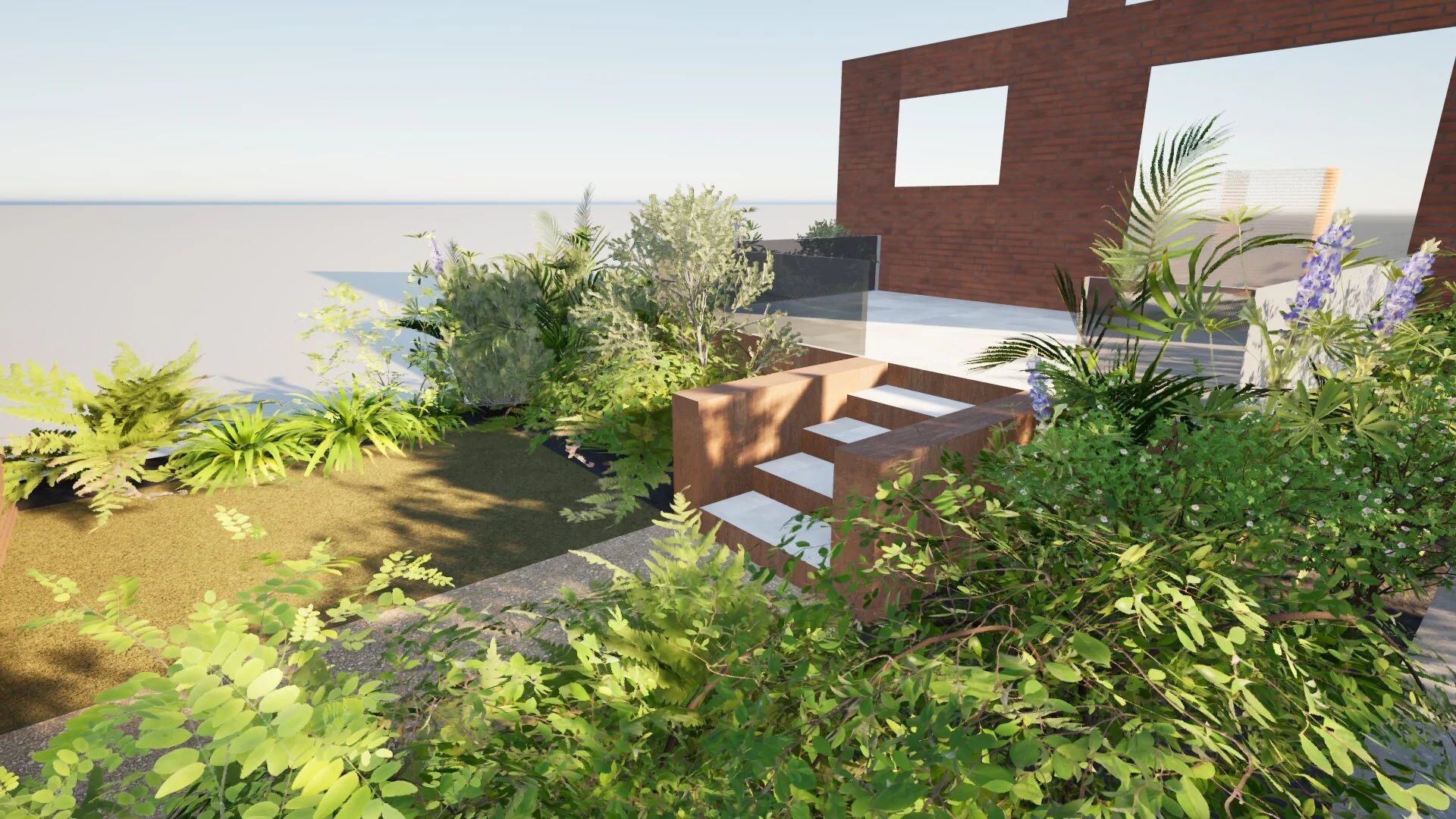
A garden without layers often feels exposed.
Everything sits on the same plane, visible all at once. The eye moves quickly across the space, with little to slow it down or draw it in. Even generous planting can feel thin if it all lives at the same height.
Layered planting changes this entirely.
By arranging plants in overlapping heights and depths, a garden gains richness. It becomes something you look into rather than across. Space feels deeper, movement feels softer and the garden begins to hold itself.
Above all else, layering is about relationship.
Building depth from ground to canopy
Layered planting starts with understanding how plants occupy space vertically as well as horizontally. Ground cover knits the soil together. In contrast, perennials rise through it, bringing movement and seasonal change. Shrubs provide mass and structure and trees sit above everything else, anchoring the garden and defining its scale.
When these layers work together, the garden becomes more resilient. Bare soil disappears, weeds have less opportunity and moisture is retained. As a result, the space feels settled rather than temporary.
Each layer has a role beyond appearance too:
Ground cover protects and cools the soil.
Perennials soften edges and bring rhythm.
Shrubs offer enclosure and habitat.
Trees provide shelter, shade and long-term structure.
None of these elements need to dominate. Their strength comes from how they overlap.
This approach also allows the garden to adapt over time. As plants grow, spread and self-seed, the layers shift. The structure remains, but the detail evolves. That sense of change is not something to manage away. It’s the sign of a garden that’s alive.
Layering as experience, not just planting
Layered planting shapes how a garden is experienced as much as how it looks.
When planting is shallow, space feels exposed. But when it has depth, you feel held. Routes become more legible, views are filtered rather than blocked and light moves through the garden in more interesting ways. It catches leaves at different heights and creates shadow where you least expect it.
Layering also introduces subtle boundaries. You don’t need fences or walls to define space when planting does the work. A low layer invites movement, while a mid-height layer slows it. As for taller planting, it creates pause and enclosure. You’ll find that the garden guides you without instruction.
Children respond to this immediately. They gravitate towards the edges between layers. Places where they can hide, peer through and move around rather than across. Layered gardens invite exploration because they aren’t fully revealed at once.
There’s a generosity to this approach too. The garden offers multiple experiences within the same space, depending on where you stand and how you move.
Designing for season, resilience and change
One of the greatest strengths of layered planting is how it carries a garden through the year.
In summer, layers are lush and full, absorbing sound and movement. In autumn, they separate and reveal structure. In winter, the absence of leaves exposes form and silhouette. And in spring, new growth rises through what was left standing, repeating the cycle.
Because the garden isn’t reliant on a single moment of display, it remains interesting even when little is in flower. Texture, form and contrast take over when colour fades.
Layering also supports wildlife. Different heights offer shelter, food and nesting opportunities. Birds move between shrubs and trees, while insects work through perennials and ground cover. The garden becomes an ecosystem rather than a collection of specimens.
From a practical perspective, layered planting often reduces maintenance over time. Once established, plants support each other. Soil stays cooler and more stable. Essentially, there’s less need for constant intervention because the garden has its own internal balance.
This requires patience, of course. Layers take time to knit together and gaps are part of the process. But when they do, the garden gains a sense of permanence that can’t be rushed.
A garden that holds depth and meaning
Layered planting gives your garden memory.
Think about the shrub that has slowly thickened over years. The tree you now walk beneath without thinking. Or the perennial that appears in a new place each spring. These moments aren’t designed in isolation, but are made possible by a framework that allows them to happen.
This is where gardens move beyond arrangement and become places of relationship.
We don’t design layers to be perfect. We design them to support life, movement and change. To hold space in a way that feels calm and grounded. And to allow the garden to deepen with time rather than flatten out.
When layers are right, the garden stops asking for attention and starts offering something back.
It gives you depth, shelter and a sense of belonging.
You can learn about more gardening terminology in our complete guide.
Want to create depth with layered planting?
Layered planting builds depth, resilience and a sense of enclosure that matures beautifully over time. If you’re thinking about how layered planting could shape your garden, we’d love to hear about your space.
Umber Garden Design creates thoughtfully crafted gardens across Warwickshire, blending considered garden design with skilled landscaping and planting that settles and deepens with every season.
Get in touch to start a conversation and explore what your garden could become.