
Garden Contouring: Working With Slopes Naturally
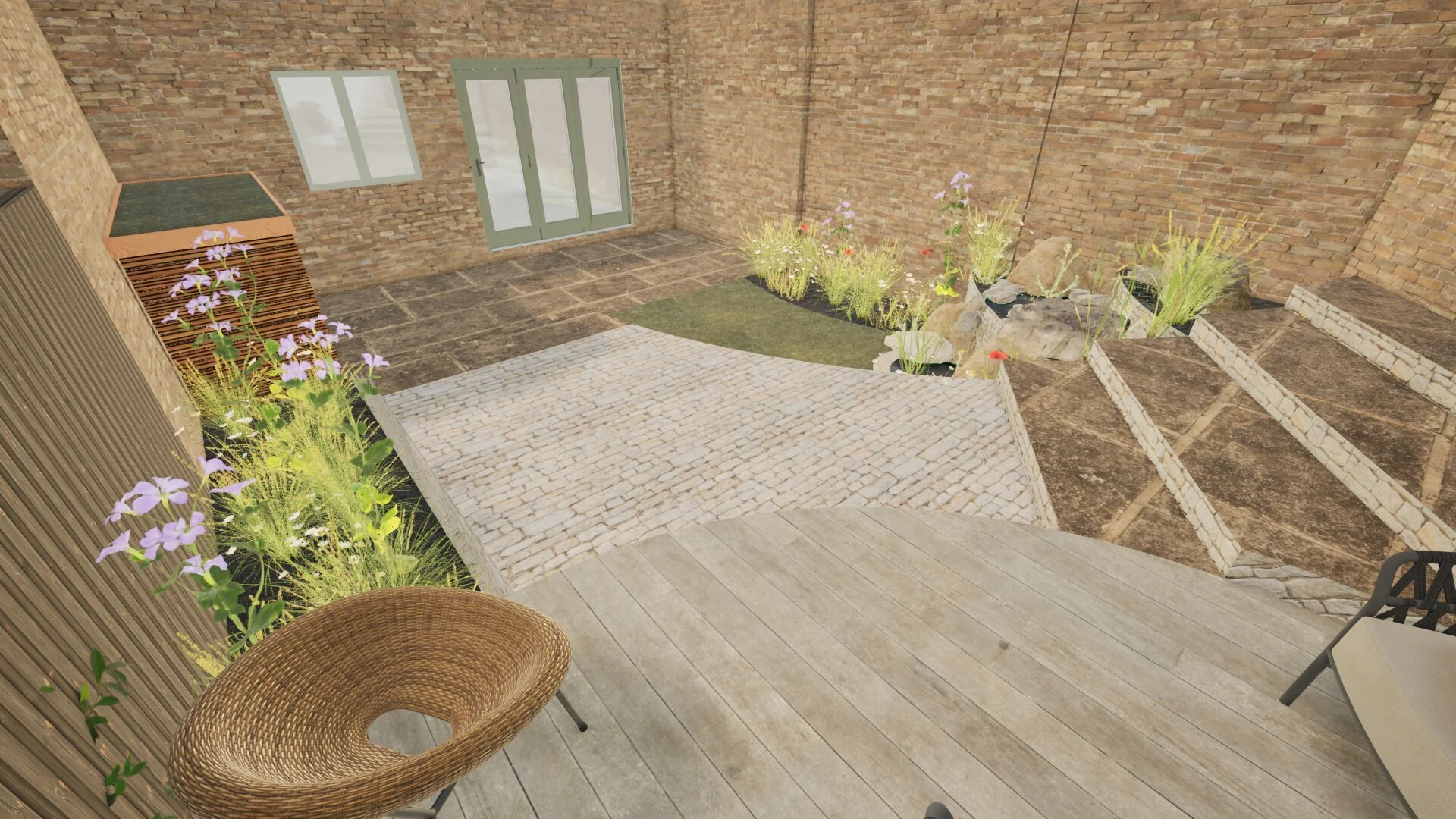
Slopes are often the first thing people want to remove from a garden.
They’re seen as awkward, limiting or something to be corrected. The instinct is usually to level, terrace or disguise them as quickly as possible. People want to make the garden easier to understand and easier to use.
But slopes aren’t a problem to be solved. They’re information. They tell you how water moves through the land. Where the ground holds moisture and where it sheds it. How the garden wants to behave if you’re willing to listen.
When we work with slopes rather than against them, the garden begins to feel settled, as though it belongs exactly where it is.
Contour doesn’t mean control. It’s more to do with your response.
Letting the land lead
Here’s the thing; a sloping garden already has movement. Your eye follows it naturally, reading the rise and fall of the land. When everything is flattened, that energy disappears. What remains may be practical, but it often feels static and disconnected from its surroundings.
By working with the existing contours, you allow the garden to retain its sense of place.
This doesn’t mean leaving everything untouched. It means shaping carefully. Softening gradients and creating moments where the slope becomes useful rather than dominant. Think about a gentle hollow that gathers water, a raised edge that becomes a seat or even a change in level that slows you down and makes you look up.
Planting plays a vital role here:
Deep-rooted plants stabilise soil and reinforce the land’s structure.
Grasses move with the slope, echoing its direction.
Shrubs and trees anchor the ground visually and physically, making the changes in level feel intentional rather than accidental.
Paths respond to contour too. A route that cuts straight across a slope can feel abrupt and uncomfortable. But one that follows the land’s curves feels natural and almost inevitable. It invites a slower pace. It encourages observation.
Shaping experience through level and movement
Above all else, slopes create opportunity.
A higher point offers an outlook, while a lower one offers enclosure. These shifts introduce zoning without walls, using height rather than barriers to define space. A sloping garden can hold multiple experiences within a relatively small footprint, simply through changes in level.
Water is never far from the conversation. On a slope, rainfall has direction. Ignoring that often leads to problems later. But working with it allows the garden to function more sustainably. Swales, rain gardens and subtle dips slow water down, allowing it to soak in rather than rush away. Over time, these features become part of the garden’s character, not obvious systems but felt ones.
There is also a visual generosity to contoured gardens. When you can’t see everything at once, the space feels larger. A slope hides and reveals. It creates anticipation. You move through the garden rather than across it, discovering it in sequence.
This is particularly powerful in rural settings, where the garden sits within a wider landscape. Mirroring the rise and fall beyond the boundary helps the garden feel grounded. It becomes an extension of the land rather than an interruption.
Even in smaller, urban gardens, contour brings softness. A modest change in level can break the rigidity of straight lines and flat planes. It introduces relief. It gives planting somewhere to settle into.
Designing with patience and permanence
Working with slopes requires a different kind of confidence. The temptation is to resolve everything immediately, to force the ground into neat levels and straight lines so it feels “finished”.
But land doesn’t behave that way and neither do gardens. Soil settles. Roots take time to knit in. Edges soften. What first looks like an awkward change in level often becomes the very thing that gives the garden its character, once it has been allowed to mature.
Over time, the slope stops being something you notice as a challenge and starts to feel like part of the garden’s identity. It becomes the place where frost lingers longest, where evening light catches, where the path naturally slows your pace. These aren’t effects you can manufacture on a drawing board. They emerge through seasons, through weather and through the quiet negotiation between what you intended and what the site offers back.
This is the difference between imposed design and responsive design. When contour is respected, the garden feels honest. It doesn’t pretend to be flatter than it is or easier than it is. It simply works with its conditions, letting the land do some of the shaping. We don’t see slopes as obstacles. We see them as starting points and when the land is allowed to lead, the garden follows naturally.
You can learn about more gardening terminology in our complete guide.
Want to work with your garden’s natural contours?
Slopes can guide movement, manage water and creating spaces that feel grounded in the land. If you’re thinking about how slopes and levels could shape your garden, we’d love to hear about your site.
Umber Garden Design creates thoughtfully crafted gardens across Warwickshire, blending considered garden design with skilled landscaping and planting that matures beautifully over time.
Get in touch to start a conversation and explore what your land could become.