
Structural Plants: Creating Shape With Living Architecture
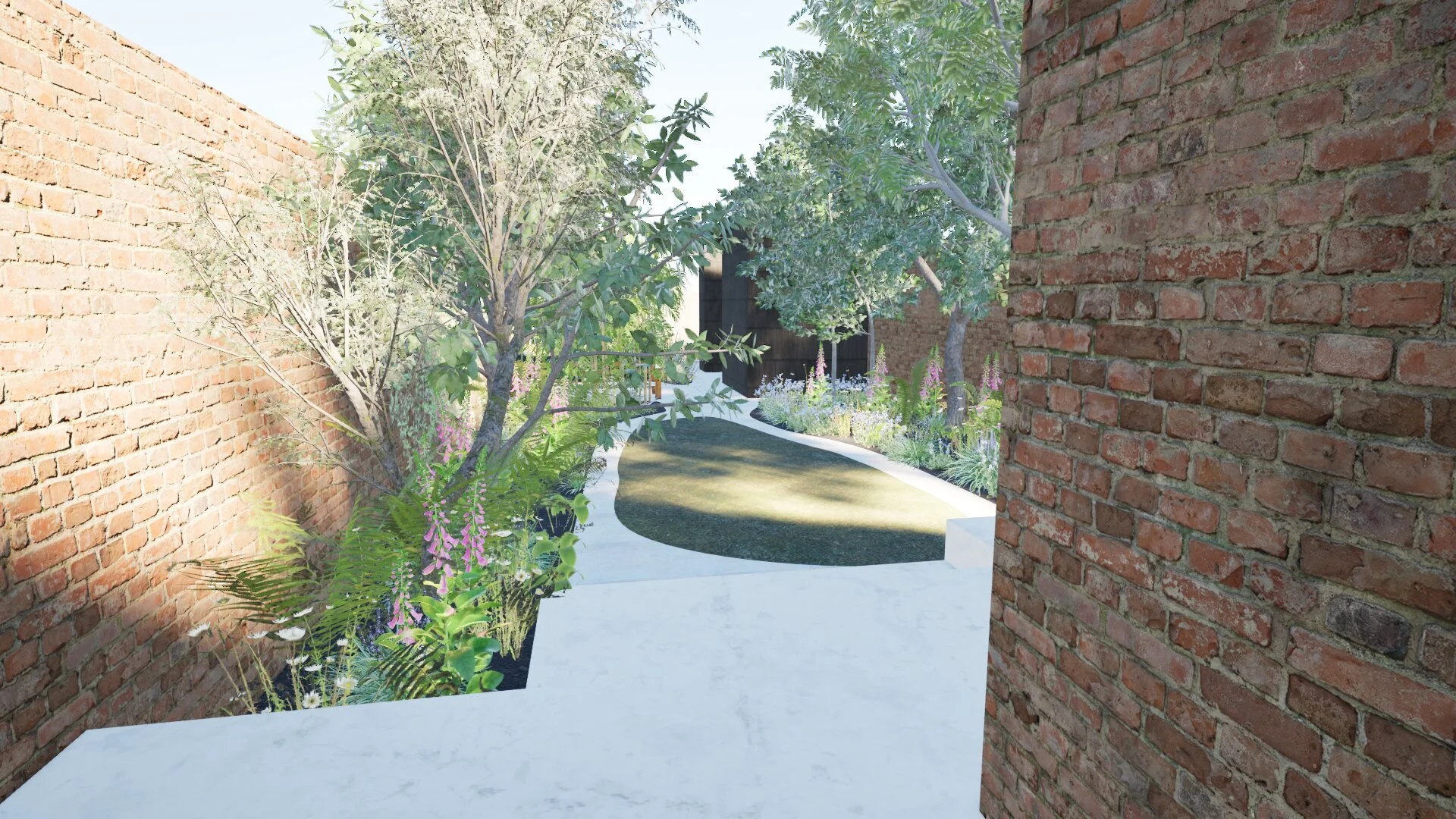
There’s a moment in every garden when planting stops being about colour and becomes about form.
It often arrives in winter. Flowers retreat, growth slows and what remains is shape. Think lines, silhouettes and the quiet geometry of stems, branches and structure holding the space together. In these moments, the garden reveals what it’s really built on.
This is where structural plants earn their place.
We often think of structure as something constructed. Walls, steps, paths and pergolas. And those things matter. But long before materials are specified or ground is broken and the true framework of a garden is often living.
Trees anchor the horizon, hedges define edges, and grasses and perennials add rhythm and vertical movement. Without these, even the most carefully built garden can feel temporary and unresolved.
Structural plants presence, not decoration.
The living framework of a garden
A well-placed tree does more than fill space. It establishes scale and anchors the garden to the ground beneath it and the sky above. You feel this instinctively when you stand beneath one. The garden stops being something you look at and becomes somewhere you’re held.
Shrubs work at a more human scale. They shape routes, soften boundaries and create moments of enclosure and release. A clipped yew hedge can feel architectural and precise. A looser hawthorn or hazel edge carries a quieter authority. Both are structural, but they speak in different tones.
What matters is intention
When structural planting is considered early, it gives clarity to everything that follows. Paths know where to go. Spaces know how to feel. Planting isn’t asked to disguise hard edges or solve problems after the fact. Instead, it becomes the thing that holds the garden together.
When structure is layered in at the end, gardens often rely on constant correction. But when it’s planted in from the beginning, they gain resilience. Living structure absorbs change, softens with age and improves over time rather than resisting it.
Structure through planting, not control
Grasses are often underestimated as structural plants. We think of them as movement and softness, but they’re also vertical lines and repetition. A drift of Calamagrostis in low winter light can read like a colonnade, each stem catching frost and shadow. Miscanthus holds its presence long after flowering, offering silhouette as much as texture.
Perennials have their structural moments too. Seed heads left standing become punctuation marks in the landscape. Think echinacea cones, verbena skeletons and the spent umbels of angelica. These forms give the eye somewhere to rest when colour fades. They remind us that a garden doesn’t disappear when it stops flowering.
There’s discipline in this approach though. Leaving things standing can feel uncomfortable in a culture that equates tidiness with care. But structure asks us to see differently. To recognise beauty in restraint and allow plants to complete their full cycle rather than editing them prematurely.
When structure is respected, the garden begins to look after itself.
How structure shapes experience
A structurally led garden reveals itself slowly. It doesn’t rely on seasonal spectacle to feel complete. On a grey January afternoon, it still makes sense. The bones are there and the framework holds. When spring arrives, the flowers feel like a gift rather than a requirement.
Children respond to this instinctively. They navigate structure, climbing, hiding and tracing edges. Trees become landmarks, hedges become routes and tall grasses become rooms that shift and breathe. A garden with clear living architecture becomes a place to explore rather than a surface to protect.
Structural planting also connects a garden to its wider context. A single tree is aligned with a distant view. A hedge echoes a field boundary beyond the fence. And a group of birch reflects nearby woodland. These decisions allow the garden to sit within its landscape rather than sitting on top of it.
This matters everywhere. In rural settings it reinforces belonging. In urban gardens it introduces depth, softness and relief from flat planes and straight lines.
Designing for time and continuity
We favour plants that age with integrity:
Trees that improve as their bark weathers.
Shrubs that thicken and settle rather than collapse.
Species that don’t peak once and vanish, but hold their presence across seasons.
This doesn’t make a garden static. Quite the opposite. Strong structure allows for looseness elsewhere. Once the framework is in place, there is room for spontaneity. Think self-seeding, experimentation and plants finding their own places within a held form.
It’s a balance between control and trust.
Over time, the structure becomes inseparable from memory. The tree planted when the garden was made. The hedge that took a decade to thicken. The moment you realise the garden feels older than it is, in the best possible way. This is something built elements rarely achieve on their own.
Living architecture carries time. It records weather, seasons, care and neglect. When we design with structural plants, we’re not just shaping space. We’re shaping how that space will be experienced years from now, by people we may never meet.
We don’t design gardens to be finished. We design them to begin well. Structure gives a garden its opening chapter and allows the story to continue long after the drawings are put away.
When structure is right, everything else finds its place.
The garden stands on its own, quietly confident, held together by living form.
You can learn about more gardening terminology in our complete guide.
Want to add year-round structure to your garden?
When we talk about structural plants, we mean the trees, hedges and planting that will hold a garden together for decades. If you’re thinking about how structural planting could shape your space, we’d love to hear from you.
Umber Garden Design creates thoughtfully crafted gardens across Warwickshire, blending considered garden design with skilled landscaping and planting that matures beautifully over time.
Get in touch to start a conversation and explore what your garden could become.