
A Place to Land: Why Every Garden Needs a Moment of Focus
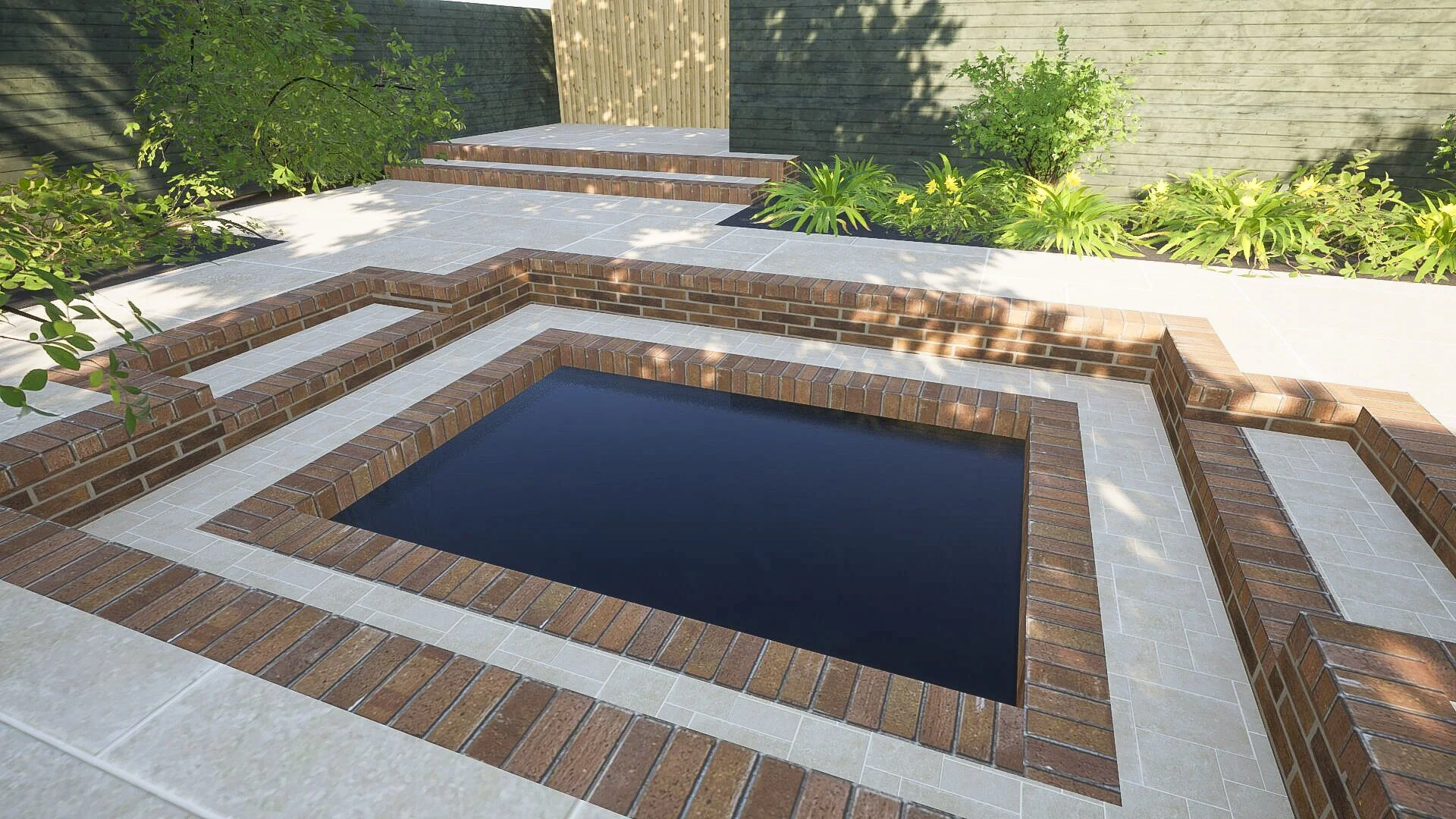
There are gardens that feel busy, even when they’re beautifully planted.
You step into them and your eye doesn’t know where to settle. It keeps moving, scanning and taking everything in at once. Nothing feels wrong, but nothing feels held either. Unfortunately, the experience becomes a kind of visual restlessness, as though the garden is speaking all the time but never quite finishing a sentence.
What’s missing? Quite often it’s a place to land.
A moment of focus doesn’t have to be dramatic. It doesn’t have to be sculpture or a statement tree or a water feature that announces itself from the patio. In many of the most enduring gardens, the focal point is subtle. It’s quiet and almost inevitable.
But crucially, it gives the space a centre of gravity. It creates orientation and allows the eye and the mind to rest.
Focus creates calm, not clutter
A focal point is sometimes misunderstood as an “extra”. Something added once the main garden is done. But a true moment of focus is about structure rather than decoration.
It helps the garden make sense, offering a reference point that other elements respond to. Without it, the garden can become a series of individual parts that never fully resolve into a whole. But with it, the space gains coherence because there is somewhere for everything to relate back to.
This is as much about feeling as it is about composition. When you can see where the garden is asking you to look, you relax. You stop trying to take everything in. The garden becomes easier to live with because it isn’t demanding constant attention.
Restraint matters here. Too many focal points creates competition. The eye is pulled in several directions at once and the garden loses its clarity. One strong moment of focus (or a small number used carefully) is usually enough to give the garden its rhythm.
What makes a focal point feel right
The best focal points feel as though they belong to the place.
Alignment
They’re often aligned with how you move through the garden or what you see from key viewpoints like a kitchen window, a threshold or the end of a path. They might sit at the point where a space changes from open to enclosed or where the garden turns and reveals something new.
Intention
They aren’t always centred. A focal point doesn’t need symmetry to be effective. In fact, a slightly off-centre moment can feel more natural and more grounded. The point is to create a sense of intention rather than a perfect picture.
Scale
Scale is crucial. A focal point that is too small will disappear. One that is too large can dominate and flatten the rest of the garden. The most successful focal points hold the space without shouting.
Time
They should also carry time. This is why living focal points are often the most meaningful:
A tree that grows and changes.
A hedge that thickens over years.
A multi-stem shrub that becomes sculptural in winter.
These elements don’t just draw the eye, they deepen the garden’s relationship with the seasons. They become part of the garden’s memory.
Focal points that are made, not placed
Sometimes the focal point isn’t an object at all, but an experience.
That could be a framed view, a bench positioned at the end of a path or threshold where you pass from one atmosphere into another. Even a pool of still water that holds the sky can be your focal point.
These moments don’t announce themselves as features, but they become the places you remember. This is where focal points become less about design tricks and more about how the garden is lived in.
A place to land can be a place to stop. It can be where you sit with a coffee or where you pause without thinking, simply because the garden brings you there. It can also be a moment you pass through or a point of orientation that subtly tells you where you are in the space.
In this sense, focal points and zoning are closely linked. A garden with no focal point can feel like it has no centre. A garden with a well-placed moment of focus often feels naturally organised because each area has a relationship to that anchor.
Material choice matters too. Stone and timber weather. Metals patinate. Living elements change. Focal points that can age tend to feel more honest over time than those chosen purely for their newness or perfection. When something can soften, it can belong.
The moment of focus as a form of generosity
A garden without a moment of focus can feel like it’s asking you to do too much.
You need to constantly interpret it or constantly maintain its interest. A focal point takes some of that pressure away. It gives the garden an anchor and in doing so it gives you an easier relationship with the space.
This is why the focal point should never feel like an afterthought. It’s part of the garden’s framework. It’s what allows everything else to be looser, softer and more natural. When you know the garden has somewhere to land, the rest can be allowed to move.
Over time, these moments of focus become inseparable from how the garden is remembered. You’ll notice that tree you planted at the start or the view that catches evening light. Not to mention the quiet corner that always feels right in winter. These are the things that turn gardens into places of meaning, not just places of planting.
A garden doesn’t need constant spectacle. It needs a centre of gravity and a place to land.
You can learn about more gardening terminology in our complete guide.
Want to create a focal point that feels truly settled?
Focal points bring clarity, calm and a sense of intention to your whole garden. If you’re thinking about how a moment of focus could shape your space, we’d love to hear about your project.
Umber Garden Design creates thoughtfully crafted gardens across Warwickshire, blending considered garden design with skilled landscaping and planting that matures beautifully over time.
Get in touch to start a conversation and explore what your garden could become.