
Balance: Why Every Garden Needs Visual Equilibrium
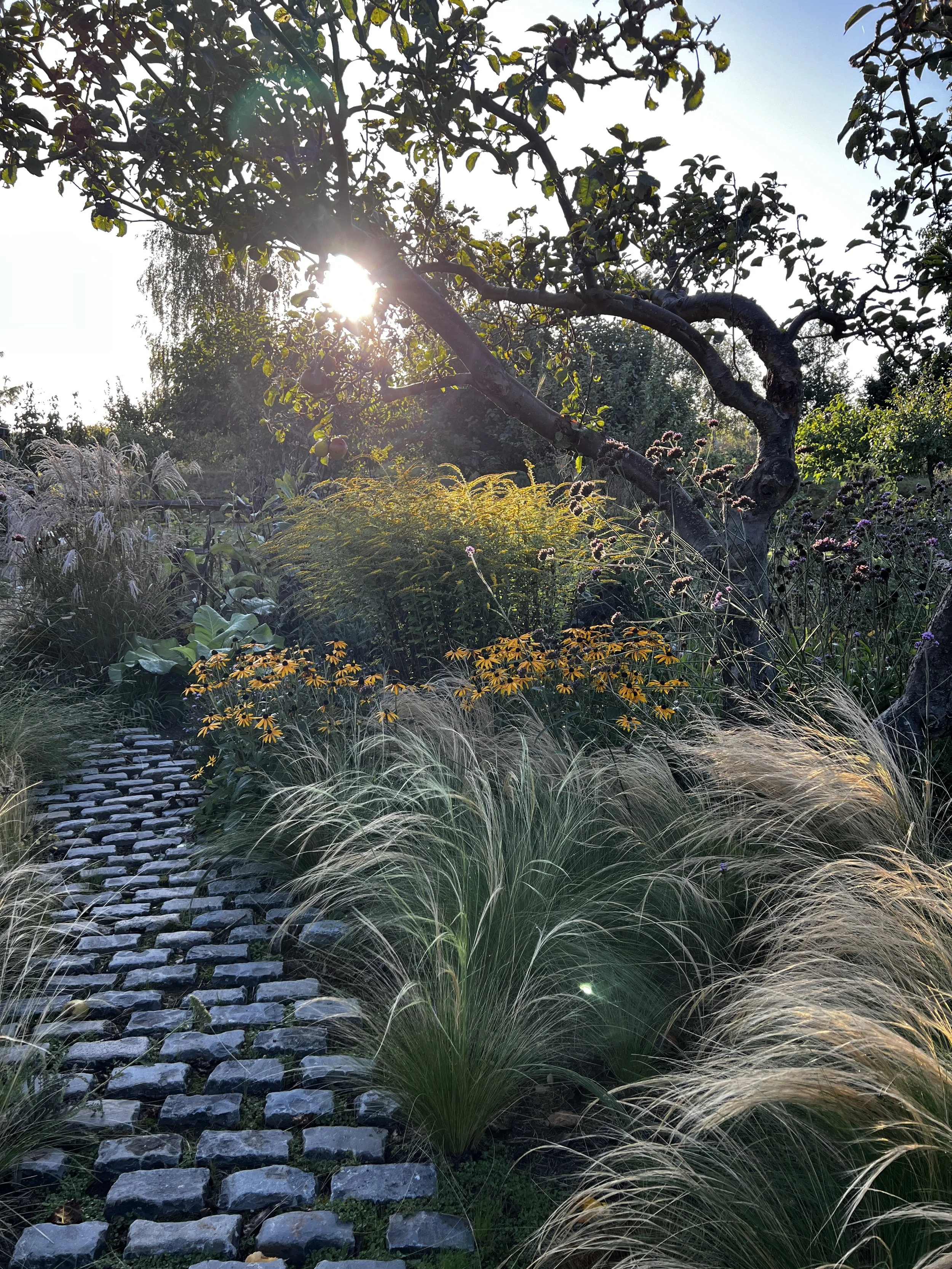
There are gardens that feel chaotic, even when they’re beautifully planted.
You step into them, and your eye can’t quite find rest. It jumps from one feature to the next, scanning and absorbing everything at once. The elements don’t seem to work together, leaving you feeling a bit off-balance. The experience becomes overwhelming, as though the garden is competing for your attention rather than inviting you to enjoy it.
What’s missing? Quite often, it’s balance.
Balance doesn’t have to be rigid. It doesn’t have to be a perfect symmetry or a formulaic arrangement of elements. In many of the most enduring gardens, balance is subtle, quiet and almost unnoticed. But it provides a sense of stability. It creates harmony between the different elements, offering a space where everything feels like it belongs.
Balance creates calm, not clutter
Balance is sometimes misunderstood as a rigid rule or a “design technique.” But true balance is about cohesion rather than order. Rather than forcing every element into a mould, you need to understand the relationship between size, mass and placement.
Without balance, the garden can feel like a jumble of unrelated parts. With balance, each piece finds its place, supporting the whole. The garden feels calm, organised and inviting. Not because every element is identical, but because there’s harmony in the way they interact.
Restraint matters here. Too much of one element creates visual noise. That could be large plants, hard materials or bold colours. The eye is pulled in multiple directions, and the garden loses its serenity. On the other hand, a balanced garden allows the eye to rest because there is rhythm in the space.
What makes balance feel right
The best balanced gardens feel natural and effortless. They don’t strive for perfect symmetry, but they do understand the power of proportion, placement and scale.
Alignment
Balance often comes from the relationship between elements and how they are arranged. For instance, a large tree on one side might be counterbalanced by a cluster of smaller plants or a bench on the other. The garden doesn’t need to be identical on both sides, but the scale of elements should complement each other to keep the eye from feeling overwhelmed.
Intention
A balanced garden isn’t accidental. Each decision about plant placement or material choice has a purpose. Whether it's the size of a plant, the shape of a stone path or the angle of a view, balance is about knowing how each element works in relation to the others.
Scale
Scale plays a crucial role in balance. Too much of one large element can dominate a space, while too many small elements can leave the garden feeling sparse. Balance is found when each part is proportionate to its surroundings. A towering tree might be balanced by lower plantings, or a wide path might be offset by dense, textural planting along its edges.
Time
Balance also exists through the seasons. A well-balanced garden doesn’t just look harmonious in one moment, but evolves gracefully over time. Plants that grow and change together create a dynamic sense of balance that deepens as the garden matures.
Balance: More than just placement
Sometimes balance isn’t about specific objects at all. Instead, it’s about how a garden feels as you move through it.
A path that curves gently through a space feels balanced because it leads you naturally from one area to the next. A sitting area that is sheltered by plants creates a sense of peaceful containment, while still allowing views to flow outward. Even subtle shifts in elevation can create a sense of balance by directing the movement of both people and light.
These moments of balance don’t announce themselves. They simply exist, guiding you through the garden in a way that feels intuitive and restful. You’re not forcing elements to match, but allowing them to complement each other naturally.
The balanced garden as a space to experience
A garden that’s balanced doesn’t demand constant attention. It doesn’t feel busy or chaotic, pulling your eye in different directions. Instead, it gives the garden a sense of structure, making it easier to live with. The garden becomes a space that invites you to relax and move through it, rather than forcing you to take everything in at once.
Balance also creates a sense of generosity. A well-balanced garden feels like it is offering something back, creating a space that accommodates different moods and activities. It provides room for both sociable gathering and quiet retreat. A balance of light and shade, openness and enclosure, brings depth to the garden and offers a variety of experiences.
The generosity of balance
A garden without balance can feel like it’s asking you to focus on everything all at once. It’s exhausting, and the experience of the garden isn’t as rich because you’re constantly adjusting to the shifting visual cues.
Now compare that with a balanced garden, which offers a restful rhythm where your eye can pause, move and settle naturally.
The goal is never to force every element into an identical form. You want to find the right relationship between size, placement and material. When balance is achieved, the garden stops demanding your constant attention and starts offering a more fulfilling experience.
Over time, these balanced moments become integral to how you experience the garden. You’ll notice the tree that frames a view, the path that leads you comfortably through the space or the plants that complement each other in form and texture. Subtle as they may be, these moments of balance turn a garden from a collection of parts into a space full of meaning.
Your garden doesn’t need to be loud or dramatic. It just needs to be balanced.
You can learn about more gardening terminology in our complete guide.
Want to create balance in your garden?
If you’re thinking about how balance could shape your space, we’d love to hear about your project.
Whether it’s through the careful placement of plants, materials or pathways, Umber Garden Design creates thoughtfully crafted gardens across Warwickshire. We blend considered garden design with skilled landscaping and planting that matures beautifully over time.
Get in touch to discover the potential of your outdoor space.