
Clay Soil: Understanding and Working with a Demanding but Rewarding Growing Medium
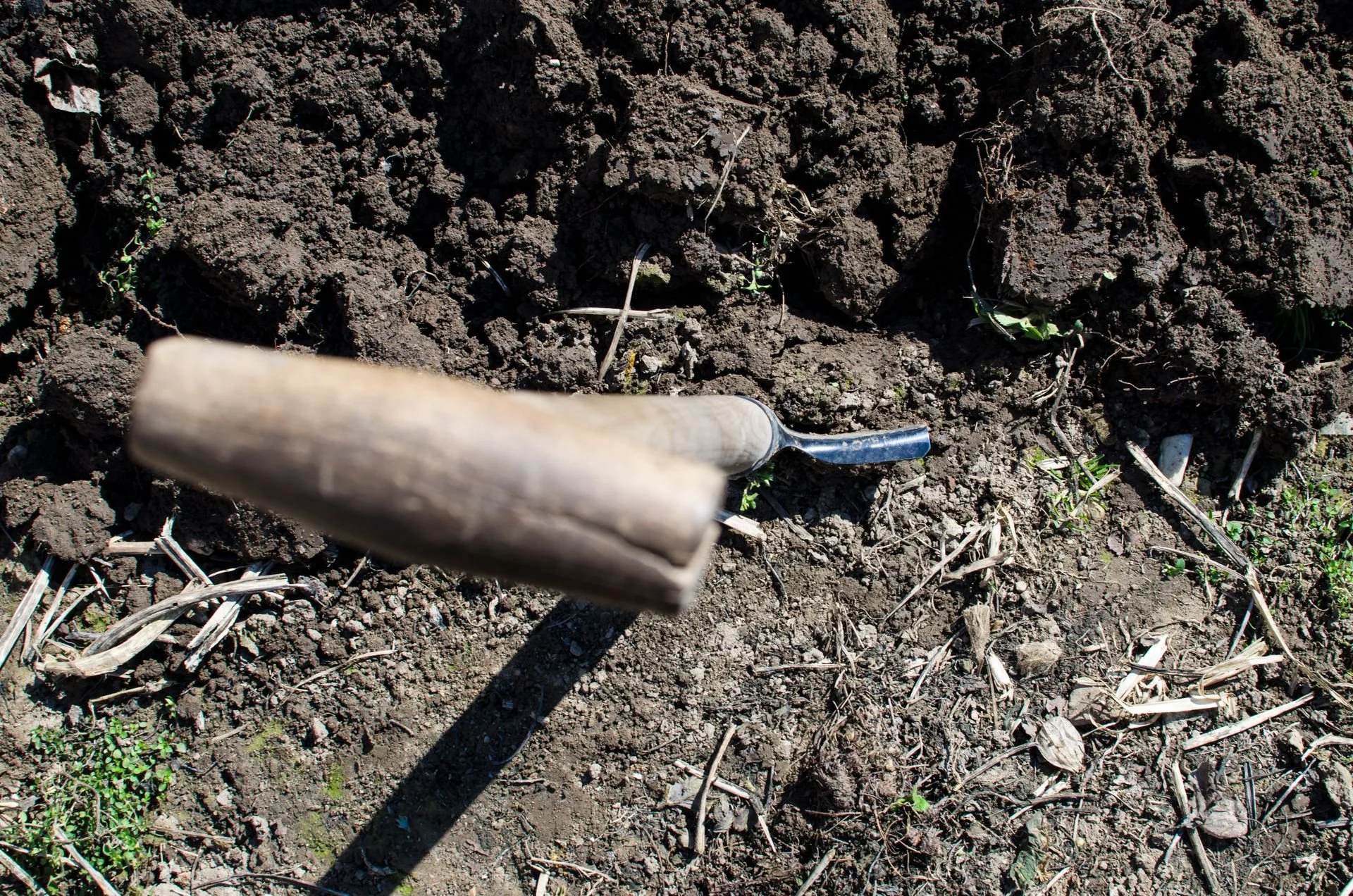
Clay soil is characterised by its fine particle structure with a capacity to hold water and nutrients. That gives it a tendency to compact and waterlog when poorly managed.
It's the dominant soil type across much of Warwickshire and the surrounding counties, and it presents a consistent set of challenges and opportunities for garden design.
In this article, we'll explore what clay soil is, why it behaves the way it does and how to improve it. We’ll also discuss which plants thrive in it and how good design works with its properties rather than against them.
What clay soil is and why it behaves differently
Soil is classified by the size of its mineral particles. Clay particles are the smallest of the three main types, far finer than silt or sand. This matters because particle size determines surface area, and surface area determines how soil behaves.
Clay has an enormous surface area relative to its volume, which gives it two defining qualities: it holds water and dissolved nutrients very effectively, and its particles bind tightly together when wet, creating a dense, heavy mass.
Wet clay soil
In wet conditions, clay absorbs water slowly and drains even more slowly. The fine particles swell as they take on moisture, closing the pore spaces through which water and air would otherwise move. The result is a soil that stays wet long after rain has stopped and becomes waterlogged during sustained rainfall.
Dry clay soil
In dry conditions the reverse happens: clay shrinks as it loses moisture, developing cracks and setting to a hard, almost ceramic consistency that's difficult to cultivate and impenetrable to shallow roots.
Compaction is the other significant issue. Heavy clay under repeated foot traffic or machinery pressure loses what little pore structure it has, becoming a near-solid layer that water can't penetrate and roots can't move through. On garden sites where groundworks have been carried out, subsoil clay is often brought to the surface or compacted by machinery, creating conditions that are genuinely hostile to plant establishment without intervention.
The case for clay: fertility and moisture retention
Clay soil has a reputation as difficult, and in some respects that's deserved. But it's also one of the most inherently fertile soil types available, and gardeners who learn to manage it well are often rewarded with growth that sandy or chalky soils can't match.
The same particle chemistry that causes waterlogging also binds nutrients tightly, preventing them from being washed through the soil profile by rainfall. Clay holds calcium, magnesium, potassium and other essential minerals in forms accessible to plant roots.
Its moisture retention is also an asset during dry spells. Sandy soils drain so freely that surface irrigation or rainfall is lost quickly, stressing plants during drought. Clay holds onto moisture reserves that carry plants through dry periods with far less supplementary watering. In the context of increasingly unpredictable British summers, with wet winters and drier growing seasons, that quality has practical value.
The key is understanding that clay soil's problems are largely structural rather than nutritional. It doesn't lack fertility. It lacks the open, crumbly texture that allows roots to penetrate freely, air to reach the root zone and excess water to drain away. Improvement programmes that address structure, combined with planting choices suited to the conditions, can make a clay garden highly productive and genuinely beautiful.
Improving clay soil: what works and what doesn't
Organic matter
Organic matter is the most effective long-term improver of clay soil. Garden compost, well-rotted manure, leaf mould and composted bark all work in the same way. Their fibrous structure physically separates clay particles, creating pore spaces for air and water movement.
Over time, the organic matter also feeds the soil biology. That includes worms, whose activity further breaks up compaction and improves structure from below. Regular applications of organic matter produce cumulative improvement over several seasons. They can be worked into the surface or applied as a mulch and allowed to be incorporated naturally.
Grit and sand
Grit and sharp sand are sometimes recommended for clay improvement, but their value is limited unless applied in very large quantities. Adding a modest amount of grit to clay can actually make structure worse by filling pore spaces without creating the aggregated crumb structure that organic matter produces.
Grit is genuinely useful when planting holes for species that are particularly sensitive to waterlogging, where a localised improvement to drainage around the root zone makes a meaningful difference.
Cultivation and timing
Timing cultivation correctly matters as much as what you add. Clay should never be worked when wet. Digging or rotavating wet clay destroys what structure exists. It smears the soil particles into a dense pan and leaves the surface worse than before.
The ideal time to cultivate is when the soil is moist but not saturated, typically in autumn when it has dried slightly from summer but before winter waterlogging sets in. Raised beds are the most reliable solution for kitchen gardens and cutting beds on heavy clay sites, separating the growing medium from the underlying soil entirely.
Plants that thrive in clay soil
Rather than spending so much effort trying to convert clay into something it isn't, choosing plants suited to its natural qualities is often the more rewarding approach. Many of the most reliable and long-lived garden plants perform well in clay, particularly those that originate in meadow, woodland edge or riverbank habitats where heavy, moisture-retentive soils are the norm.
Trees and shrubs generally do well in clay once established. Their deep root systems can exploit the fertility and moisture reserves at depth. Malus, Prunus, Viburnum, Rosa and Cornus all perform reliably.
Among herbaceous perennials, Astilbe, Hemerocallis, Persicaria, Ligularia and Geranium are strong performers. For a more structural planting, Miscanthus grasses establish well in clay and provide excellent late-season interest.
Plants to avoid in unimproved clay are those from Mediterranean or alpine origins that require sharp drainage: Lavandula, Cistus, Verbascum and many bulbs will struggle or fail in heavy, wet ground.
In borders where these plants are wanted, a raised or mounded planting area with improved soil and added grit gives them the drainage they need without requiring the whole garden to be transformed.
Clay soil and garden design: working with what's there
A garden designed with its soil in mind from the outset performs better and requires less intervention than one designed independently of site conditions. On clay sites, this means addressing drainage as a foundational decision before planting or hard landscaping begins.
Related reading: Backfill Explained: The Hidden Work Behind Every Retaining Wall
It also means thinking carefully about traffic routes (since repeated foot traffic on wet clay creates compaction quickly) and ensuring paths and terraces are built on adequate sub-bases that won't shift or settle as the clay below expands and contracts seasonally.
Levels matter particularly on clay sites. Ground that sits level or slightly hollow will collect water and stay wet for extended periods. A modest fall away from planting beds, structures and the house itself keeps the soil in a workable condition for more of the year. That can be combined with drainage infrastructure where needed. These are decisions made at the design stage, not corrections applied afterwards.
Mulching is one of the most practical ongoing management tools for clay. A thick layer of organic mulch applied to borders in late autumn or early spring can:
Suppress weeds
Moderates soil temperature
Gradually improve structure as it breaks down
Prevent surface capping (the hard crust that forms when bare clay is exposed to rainfall and then dries)
Keeping the soil surface covered is also one of the simplest things that can be done to maintain workable conditions.
You can learn about more gardening terminology in our complete guide.
Ready to design a garden that works with your soil?
Clay soil is one of the most common starting conditions for garden projects across Warwickshire, and one that rewards a considered approach. At Umber Garden Design, site analysis includes a thorough assessment of soil type and condition before any design decisions are made.
Understanding what's in the ground shapes everything from drainage specification and structural sub-bases to planting choices and long-term management, and it's knowledge that only comes from looking carefully at the site itself.
Whether you're starting with a newly built plot, a long-neglected garden or an established space that's never quite performed as it should, we can assess the conditions and design around them. Contact us today to arrange a consultation with Mark and find out what your soil can do.