
Pea Gravel: What It Is, Where It Works and What to Consider
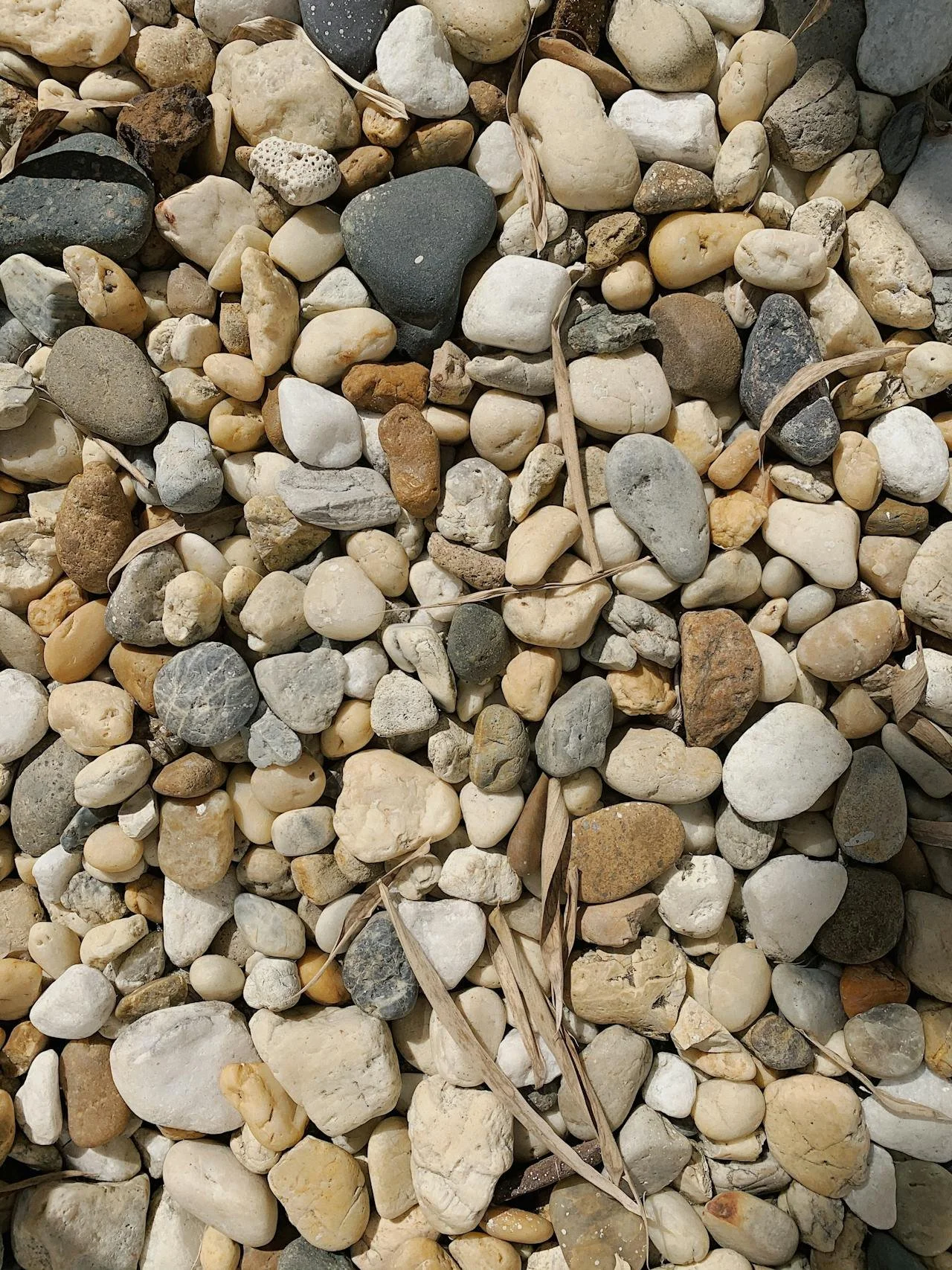
Pea gravel is a small, rounded gravel commonly used in residential garden design for paths, borders and informal surface areas. Its name comes from its size, which is roughly the same as a garden pea (typically 8-10mm in diameter).
In this article, we'll explore what pea gravel is and where it works well in a garden context. You’ll also learn some practical considerations before specifying it and what to expect from it over time.
What is pea gravel?
Pea gravel is sourced from riverbeds and gravel pits, where decades of water movement have worn the stones smooth and round. That rounding is what distinguishes it from angular aggregates such as crushed granite or limestone chippings, which are mechanically broken and have sharp, irregular edges.
The rounded profile has practical consequences. Pea gravel shifts more readily underfoot than angular stone, because the stones can't lock together in the same way. This makes it less suitable for some applications and well suited to others. It's also relatively affordable and widely available, which makes it a popular choice for larger surface areas where cost per square metre is a consideration.
In terms of appearance, the natural weathering also adds a gently varied colouring. Pea gravel ranges from warm buff and honey tones through to grey, cream and pale brown.
Where pea gravel works well
Pea gravel performs well in informal garden settings where a relaxed, natural aesthetic is part of the design intention. Its properties are an asset in:
Lightly used paths through planting areas
Meandering routes through a kitchen garden or orchard
Gravel gardens planted with drought-tolerant species
It's also used as a mulch layer in planting borders, laid over a permeable membrane to suppress weeds and retain moisture. In this application, the movement issue that affects paved paths is largely irrelevant, and the soft, natural appearance works well alongside planting.
Pea gravel is permeable, which means it allows rainwater to drain through rather than run off. On sites where drainage is a consideration, or where planning requirements favour permeable surfaces, this is a practical advantage over both paving and concrete.
Practical considerations before specifying it
Movement
Pea gravel's rounded profile means it moves. On a flat, well-edged path with low foot traffic, this is manageable. On a slope, in a high-traffic area or without adequate edging to contain it, the gravel will migrate. That means moving into borders, onto lawns and across adjacent surfaces.
Edging
With the above in mind, edging is essential. Without a physical barrier at the path edge, the gravel will spread outward over time. Options include steel, timber, stone and brick. Whatever your preference, the edging detail is worth investing in. A poorly finished edge undermines the appearance of the path as much as the gravel itself.
Young children (and heels)
Pea gravel isn't well suited to areas used by young children, where loose stones can become a hazard. It’s also not ideal in gardens where high heels are likely to be worn, as the stones shift underfoot in a way that angular gravel or bound surfaces don't.
Installation and what's needed beneath
When you’re installing pea gravel, a proper sub-base is needed to prevent the surface from becoming uneven and to stop the gravel from sinking into soft ground over time. Typically, this means a compacted layer of hardcore or MOT Type 1 beneath a layer of sharp sand, with the pea gravel laid on top to a depth of around 50mm.
A permeable geotextile membrane laid between the sub-base and the gravel layer helps to suppress weed growth without blocking drainage. It won't eliminate weeds entirely, particularly those that germinate in the gravel itself. But it significantly reduces the number coming up from below.
Depth matters. Too little gravel and the surface beneath starts to show through with use. Too much and the path becomes difficult to walk on. As above, aound 50mm is the practical standard for a residential path.
How pea gravel performs over time
The material itself doesn't degrade. The stones won't crack, fade significantly or lose their character over time. A pea gravel path that's properly installed and occasionally maintained will still be performing well ten or fifteen years after it was laid, which makes it a cost-effective choice for the right application.
That said, pea gravel is low maintenance but not no maintenance. Here’s what you need to know.
Organic matter
Over time, organic matter accumulates in the surface, leaf litter breaks down and the gravel can start to look tired if it isn't periodically raked and topped up. In most garden settings, a light rake in spring and autumn is sufficient to keep the surface looking well tended.
Weeds
Weeds will appear, particularly in the gravel layer itself where windblown seeds can germinate. Hand weeding or occasional treatment keeps this manageable. The permeable membrane beneath handles the rest.
You can learn about more gardening terminology in our complete guide.
Get the right surface for your garden
Pea gravel is a versatile and cost-effective material that suits a wide range of garden contexts when it's specified and installed correctly. At Umber Garden Design, surface material selection is part of our garden design and landscaping process. Everything is chosen to suit the character of the space, the way it's used and how it'll perform over time.
Whether you're planning a new path, a gravel garden or a larger landscaping project in Warwickshire, we'll help you find the right approach for your site. Contact us today to arrange a consultation.