
A Line Worth Following: The Garden Axis Explained
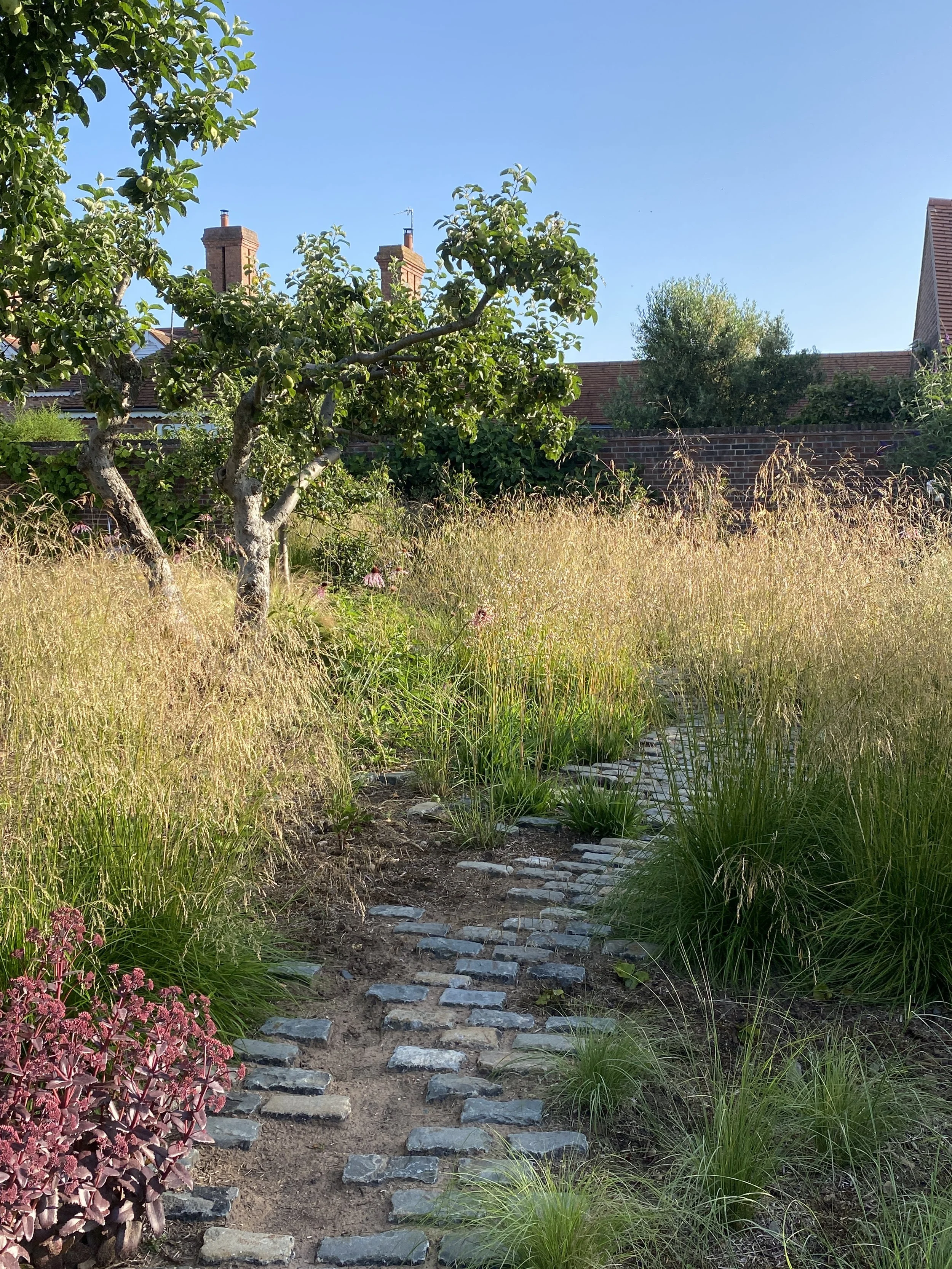
A garden axis is a deliberate line of sight that draws the eye from one point in a garden to another. It gives a space direction and makes even a modest plot feel longer than its boundaries suggest.
The terms axis and sightline are often used interchangeably. Strictly speaking though, the axis is the line itself, and the sightline is the view along it. In this article, we'll explore where the idea comes from, how an axis draws the eye, the main types and the practical decisions that keep one working.
Where the garden axis comes from
The axis is one of the oldest tools in garden design. Formal gardens in Renaissance Italy and seventeenth-century France were laid out along a central line running from the main house, with terraces, pools and avenues arranged symmetrically either side. At Versailles, André Le Nôtre stretched the principal axis for several kilometres towards the horizon.
English gardens took the idea in a looser direction. Arts and Crafts gardens such as Hidcote in Gloucestershire used shorter axes to link enclosed garden rooms, with each view through a gap in a hedge leading on to the next space. This is the model most relevant to residential gardens today: an axis that organises and balances the garden without dominating it.
How an axis draws the eye
An axis works because the eye naturally follows a straight line until it finds something to rest on. Every successful axis has a clear starting point, usually a door, window or terrace where the view is first seen, and a destination at the far end that rewards the look.
Between the two, a path, a strip of lawn, a rill or a pair of matching borders will strengthen the direction of travel. Clipped yew domes, pleached trees or pots set at regular intervals create a rhythm that pulls the eye forward.
The destination matters most. A sightline that ends at a fence panel feels like a mistake, while a bench, sculpture, specimen tree or garden building gives the line a purpose and invites people to walk its length.
Related: A Place to Land: Why Every Garden Needs a Moment of Focus
Types of axis in a garden
The primary axis
The main axis usually runs out from the most-used door or window of the house, often the kitchen or garden room. It sets the structure for everything else, so it's normally the first line fixed on a plan.
Cross axes
A cross axis runs at right angles to the primary line, creating a junction where two views meet. These intersections are natural places for a seating area, a water feature or a change of level, and they help a garden read as a sequence of spaces rather than a single view.
Diagonal and offset sightlines
In wider or irregular plots, a diagonal line from corner to corner often gives the longest available view. An offset view glimpsed through an opening can also be more intriguing than a symmetrical one.
Borrowed views
Where a garden looks out over open countryside, a church spire or a mature tree beyond the boundary, an axis can be aligned to frame it. This technique is known as borrowing a view. It makes the wider setting part of the garden and is particularly effective on rural Warwickshire plots.
Designing a sightline that works
Perspective
Start with where the view is seen from. Most people see their garden from the house far more than from the garden itself, particularly in winter. So, aligning the main axis with a frequently used window means it earns its keep all year.
Proportion
Proportion comes next. A narrow path down a wide lawn looks thin, while an oversized axis in a small garden feels like a runway. As a guide, a path along an axis should be wide enough for two people to walk side by side. Steps should be centred on the line, so they read as part of it rather than interrupting the view.
Concealment
A degree of concealment also helps. Planting that partly hides the destination, or an arch that frames it, creates anticipation and draws people through the space.
Axes in smaller and informal gardens
An axis isn't reserved for large formal estates. In a narrow town garden, a single strong line from the back door to a well-placed bench or tree can make the plot feel noticeably longer. Dividing it with hedging or screens so the axis is experienced in stages adds depth that a fully open garden can't.
Informal and naturalistic gardens use the same principle more softly. A mown path through meadow planting or a line of multi-stemmed trees can direct the eye without any hint of symmetry, with the structure carried by planting rather than hard landscaping.
Keeping a sightline clear over time
An axis is only as good as its upkeep. A view that's open in the first summer can be closed off within a few years by spreading shrubs or overhanging branches. Hedges that frame a sightline need clipping at least once a year to keep their lines crisp, and a specimen tree at the end of a view should be chosen with its mature size in mind.
Lighting can extend the axis into the evening. A single uplight on the focal point at the far end keeps the line legible after dark, so the view from the house stays in use through winter. Planned well from the outset, an axis becomes the framework the rest of the garden grows around.
You can learn about more gardening terminology in our complete guide.
Ready to plan the views through your garden?
A well-placed axis gives a garden direction and a reason to explore. At Umber Garden Design, sightlines are one of the first things we consider in every garden design, shaping the layout around the views that matter most from the house. We'll work closely with you to find the strongest lines in your plot and build the landscaping and planting to support them.
Whether you're laying out a new garden from scratch or reworking an established one, we'll make sure every view leads somewhere worth going. Contact us today on 01926 754 049 or at hello@umbergardendesign.co.uk to arrange a consultation.