
Biodiversity in Garden Design: Why Variety of Life Matters
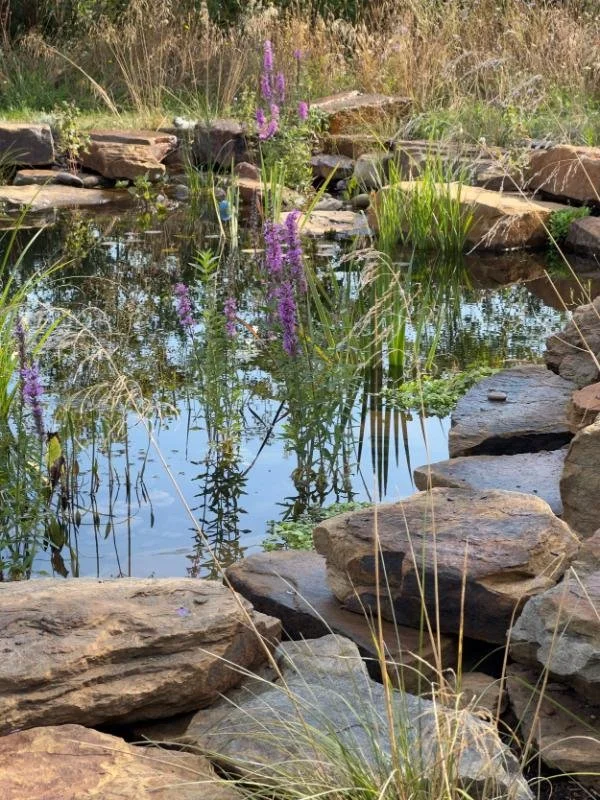
Biodiversity refers to the variety of living things a space supports. Think plants, insects, birds, mammals, fungi and the countless soil organisms that underpin everything above ground. In a garden context, it describes how much life the space actively sustains and how well connected that life is to the wider ecosystem beyond the boundary.
In this article, we'll explore what biodiversity means at garden scale and why it matters both ecologically and practically. You’ll learn how planting choices and design decisions affect the range of species a garden can support and what a genuinely biodiverse garden looks and performs like across the seasons.
What biodiversity means at garden scale
Biodiversity is an outcome of several individual decisions:
What plants are grown
How they're managed
What habitats are created
Whether the garden connects to the landscape around it
A garden rich in biodiversity isn't necessarily wild or unmanaged. It can be highly designed and still support a wide range of species if the right conditions are in place.
The most useful way to think about biodiversity in a garden is in terms of layers. A garden with trees, shrubs, perennials, ground cover and a lawn or meadow area provides habitat at multiple levels:
For nesting birds in the canopy
For insects in the flower heads
For small mammals and amphibians at ground level
For fungi and invertebrates in the soil below
Remove any of those layers and you reduce the range of species the garden can support.
Gardens collectively cover a significant area of land in the UK, far more than many national nature reserves. What happens in them, across millions of individual plots, has a real cumulative effect on wildlife populations. So, a garden designed with biodiversity in mind is a small piece of a much larger ecological network.
Planting for pollinators and beyond
Flowering plants are the most direct way to support biodiversity. They provide nectar and pollen for bees, hoverflies, butterflies and other pollinators, and their seeds and berries feed birds and small mammals later in the season. The range of species a garden attracts is closely related to the diversity of its planting. A garden with fifty different plant species will support considerably more wildlife than one with five.
Native plants tend to support more species than non-natives because UK insects and birds have evolved alongside them over thousands of years. Crataegus monogyna (hawthorn), Corylus avellana (hazel), Leucanthemum vulgare (ox-eye daisy) and Digitalis purpurea (foxglove) each support long lists of associated species. That said, many non-native plants are highly valuable. Echinacea, Verbena bonariensis and Nepeta all provide abundant nectar for pollinators well into autumn when native species have finished flowering.
Avoiding double-flowered cultivars is worth noting. Roses, dahlias and other plants bred for fuller, showier flowers often produce blooms in which the reproductive parts, (and therefore the pollen and nectar) have been replaced by additional petals. They look attractive but offer little to visiting insects. Single-flowered species and cultivars almost always provide more ecological value.
Plant succession matters as much as plant selection. A garden that has something flowering from February through to November provides a consistent food source across the whole active season for insects rather than a short peak followed by nothing.
Habitat beyond the border
Planting accounts for a lot of a garden's biodiversity value, but habitat features extend it considerably. Dead wood, water, bare soil, long grass and undisturbed leaf litter each support species that wouldn't otherwise be present. Together, they allow a garden to function as a genuine habitat rather than just a food source.
Water
Water is one of the most powerful additions to any garden. As well as being a good focal point, a pond supports more species per square metre than almost any other garden feature. Aquatic invertebrates, amphibians, birds, bats and a wide range of insects all depend on or are drawn to standing water. And it doesn't need to be large to be effective. A container pond in a small urban garden will attract wildlife within days of filling.
Wood
Log piles, standing deadwood and rough-barked trees provide habitat for the beetles, fungi and invertebrates that form a critical part of the garden food chain. They're also low-cost and low-maintenance. A stack of logs left in a quiet corner will colonise itself without any further intervention. The instinct to tidy these features away is understandable but ecologically counterproductive.
Grass
Long grass and meadow areas dramatically increase the insect life a garden supports. Grasshoppers, beetles, spiders and a wide range of moth and butterfly larvae depend on longer sward that is cut infrequently. A section of lawn left unmown from April to August and cut once in late summer provides a meaningful habitat contribution without requiring the whole lawn to be given over to meadow.
Design decisions that affect biodiversity
Some of the most significant design decisions for biodiversity aren't about what to plant but about what not to install. Artificial grass eliminates habitat entirely. There are no soil organisms, no insects and nothing for birds to forage in. Extensive hard surfaces reduce the permeable area available for the soil ecosystem to function. Excessive outdoor lighting disrupts nocturnal insects, particularly moths, which are a critical food source for bats and birds.
Boundary treatment makes a meaningful difference too. Solid fences break the garden off from adjacent plots and prevent ground-level movement of hedgehogs, frogs and small mammals. Gaps at the base of fences or walls (or boundaries planted as mixed native hedges) allow wildlife to move through and between gardens. A hedgehog highway (a 13cm gap at the base of a fence panel) costs nothing to install and connects the garden to a wider network. To see how your own garden measures up across planting, water, shelter and access, our Wildlife-Friendly Garden Score gives you a rating out of 100 and the easy wins to improve it.
Soil health underpins everything. A garden with living, well-structured soil supports the fungal networks, earthworms and invertebrates that the whole food chain depends on. Avoiding pesticides, reducing soil disturbance and incorporating organic matter all contribute to a soil ecosystem that works rather than one that simply holds plants upright.
Biodiversity and garden design: a practical compatibility
There's a persistent assumption that a biodiverse garden is a neglected one: overgrown, undesigned and difficult to manage. The reality is quite different. Biodiversity and good design are compatible, and in many respects they reinforce each other. Dense, layered planting suppresses weeds and reduces maintenance. A pond adds visual interest as well as ecological value. Native hedging provides privacy and seasonal change as well as wildlife habitat.
The gardens that support the most biodiversity tend to be those designed with genuine attention to what they're asking the space to do across the whole year. Not just in the flowering season, but in winter, at soil level and at the edges where garden meets boundary. That kind of thinking produces gardens that are more interesting to spend time in as well as more ecologically productive.
Designing for biodiversity is simply a more complete way of thinking about what a garden can be.
You can learn about more gardening terminology in our complete guide.
Ready to design a garden that supports more life?
Biodiversity is one of the principles that shapes how we approach every project at Umber Garden Design. From planting selection and soil preparation through to habitat features and boundary treatment, ecological thinking is part of the design process from the outset, not an afterthought.
If you're considering a new garden or a significant redesign in Warwickshire, we'd welcome the conversation. Contact us today to arrange a consultation with Mark Wright, or call 01926 754 049 or email hello@umbergardendesign.co.uk.