
Drainage Done Right: How to Manage Excess Water in a Garden
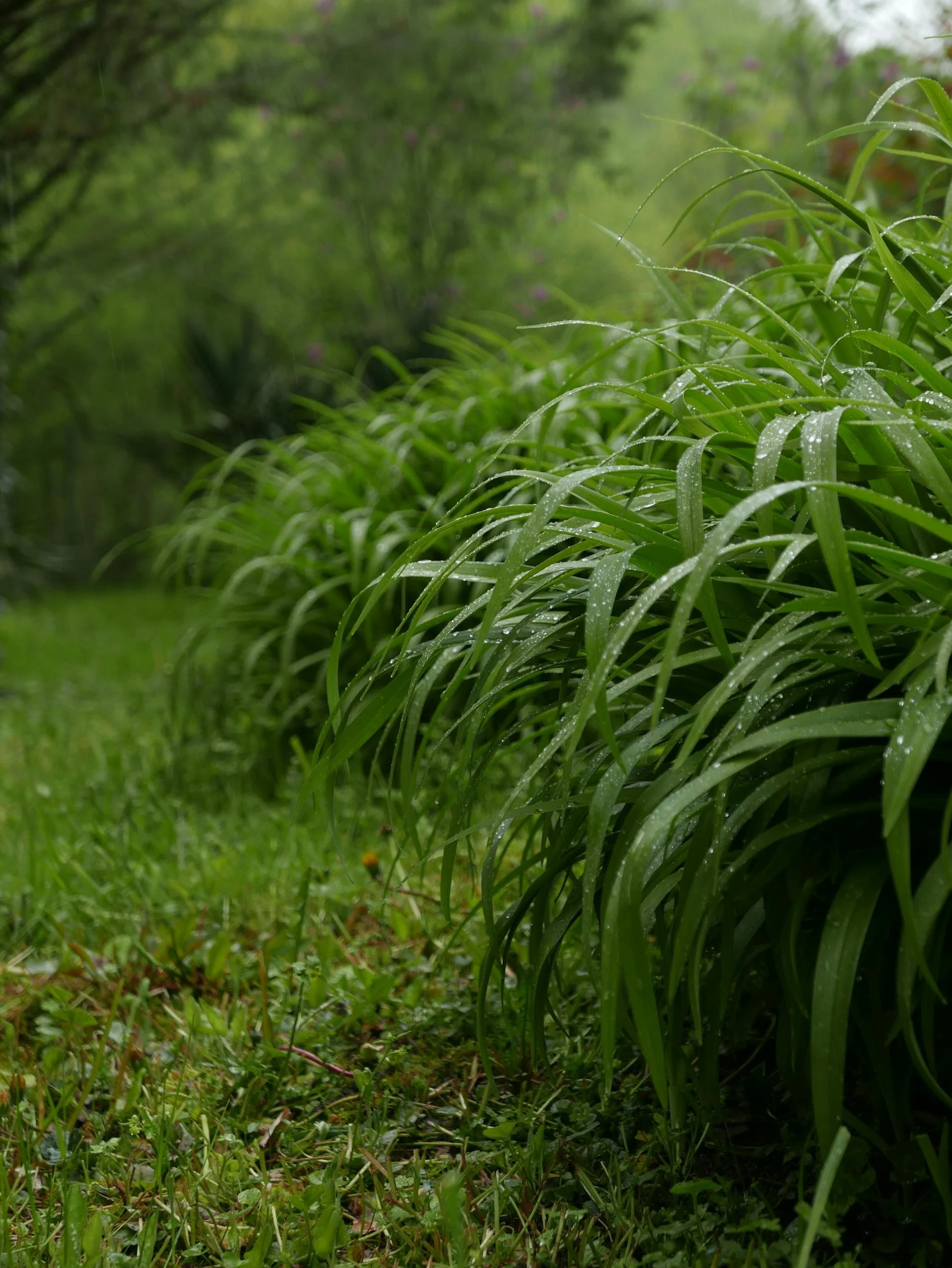
Poor drainage is one of the most common causes of garden failure. It’s also one of the most frequently overlooked at the design stage.
Waterlogged soil damages plant roots, degrades hard surfaces, undermines structural foundations and turns usable outdoor space into unusable ground for months at a time.
In short, getting drainage right is a foundational decision that shapes everything built above it. In this article, we'll explore how to identify drainage problems, the main methods used to resolve them, and how levels, drains, soakaways and planting choices all play a role in a properly managed garden.
Identifying the problem: what poor drainage looks like
Drainage problems reveal themselves in a few consistent ways. The most obvious signs are:
Standing water after rainfall that takes more than an hour or two to clear.
Persistent wet patches in lawn or borders
Compacted soil that puddles on the surface rather than absorbing water
Plants showing signs of root rot or yellowing foliage despite adequate care
In more severe cases, water finds its way into outbuildings, runs toward the house or sits against retaining walls.
The underlying cause is usually one of three things:
Soil type that drains slowly (heavy clay being the most common in Warwickshire)
A site that collects water from higher ground
Hard landscaping that has directed runoff somewhere it can't escape
Often it's a combination. A proper site analysis is the only reliable way to understand what you're dealing with before deciding how to address it. It should include an assessment of soil type, existing levels and how water moves across the garden during and after heavy rain.
Managing levels: drainage starts with the ground
Before any drain or soakaway is specified, the ground levels of a garden should be considered carefully. Water always follows gravity, and a well-designed garden uses that fact deliberately. Grading the ground so that it falls gently away from the house and structures is the first line of defence, directing water toward planted areas or collection points rather than back against buildings. Even a modest fall of one in eighty, barely perceptible underfoot, is enough to move water effectively.
Levels also determine where terracing and retaining structures are needed. On sloped sites, cut-and-fill operations that create level terraces must be handled carefully. Poorly executed terracing can trap water behind retaining walls or create low points where none existed before. A topographical survey at the design stage will capture existing levels accurately across the whole garden. In short, it prevents these problems from being built in from the start.
Drainage systems: channels, French drains and land drains
When level management alone isn't sufficient, drainage systems move water more actively. The most common types used in residential garden projects are channel drains, French drains and land drains, each suited to different situations.
Channel drains
Channel drains are surface drains, typically linear, installed at the edge of hard surfaces like terraces, driveways and paths. They intercept runoff at the point where it would otherwise pond or spread and direct it into an underground pipe.
In a well-designed garden, channel drains are positioned at low points in the paving layout and integrated into the overall drainage route, so water moves efficiently to its end point. That could be a soakaway, a planted area or a connection to surface water drainage.
French drains
French drains are subsurface trenches filled with gravel and typically containing a perforated pipe. They intercept groundwater moving laterally through the soil and redirect it.
On sites where water tracks downhill through the ground and collects at a low point, a French drain installed across the slope can intercept it before it reaches a problem area. They're also used around the perimeter of buildings, planted beds and retaining walls where subsurface water pressure would otherwise cause damage.
Land drains
Land drains are a wider-scale version of the same principle, used for larger areas such as lawns, fields or extensive planting beds. A network of perforated pipes laid in a herringbone or grid pattern beneath the soil carries water away from the root zone.
In Warwickshire's heavier clay soils, land drainage beneath a lawn can be the difference between a usable surface year-round and a waterlogged one from October to April.
Soakaways: where the water goes
A soakaway is an underground structure that receives collected water and allows it to disperse slowly into the surrounding soil. In most residential garden drainage schemes, it's the end point of the system. Channel drains, French drains and land drains all ultimately need somewhere to discharge, and where connection to a surface water drain isn't practical or permitted, a soakaway provides the answer.
A soakaway is only effective if the surrounding soil can absorb water at an adequate rate. Before specifying one, a percolation test is carried out: a hole is dug to the intended soakaway depth, filled with water, and the rate at which it drains is recorded.
On sites with heavy clay, the percolation rate may be too slow for a standard soakaway to function correctly. In this case, alternative discharge routes need to be considered. Correct sizing is also critical: a soakaway that's too small for the catchment area it serves will simply overflow during heavy rain, returning the problem to the surface.
Modern soakaways are typically built using plastic crate systems rather than rubble-filled pits. Crate systems offer a greater void ratio, meaning more storage capacity for the same excavated volume, and they don't collapse or silt up over time in the way that rubble fills can. They're wrapped in geotextile membrane to prevent fine soil particles from migrating into the structure and reducing capacity.
Planting as part of the drainage solution
Drainage isn't only a civil engineering problem. Planting plays a meaningful role in how water behaves in a garden. Plant roots break up compacted soil and improve its permeability over time. Dense planting cover reduces surface runoff by intercepting rainfall before it hits bare ground. And in areas where water naturally collects, the right plant choices can turn a drainage problem into a design feature.
A rain garden is a deliberately designed low point planted with species that tolerate periodic inundation: Iris pseudacorus, Filipendula ulmaria, Persicaria bistorta and Caltha palustris all thrive in conditions that would kill most border plants. Rather than fighting the hydrology of a site, a rain garden works with it, managing water naturally while supporting pollinating insects and adding genuine seasonal interest. On sites where a low-lying area is unavoidable, this approach is often more resilient and more interesting than a purely engineered solution.
Permeable hard surfaces are another part of the picture. Gravel, permeable block paving and resin-bound aggregate all allow water to pass through to the ground below rather than generating runoff. On smaller sites, or where the soil permeability is reasonable, these surfaces can reduce the load on drainage infrastructure significantly.
You can learn about more gardening terminology in our complete guide.
Ready to address drainage in your garden?
Good drainage is the foundation of a garden that performs well year-round. At Umber Garden Design, drainage assessment is part of our site analysis process on every project: we look at soil type, existing levels and how water moves across the site before any design decisions are made. Our in-house landscaping team then carries out the groundworks, drainage installation and hard landscaping as part of a single, continuous process, with no handovers and no loss of detail between design and build.
Whether you're dealing with a persistently waterlogged lawn, runoff from a new terrace or a site that collects water from higher ground, we can assess the problem and design a solution that addresses it properly. Contact us today to arrange a consultation with Mark and discuss what your garden needs.