
Evergreen Planting: Colour, Form and Year-Round Presence
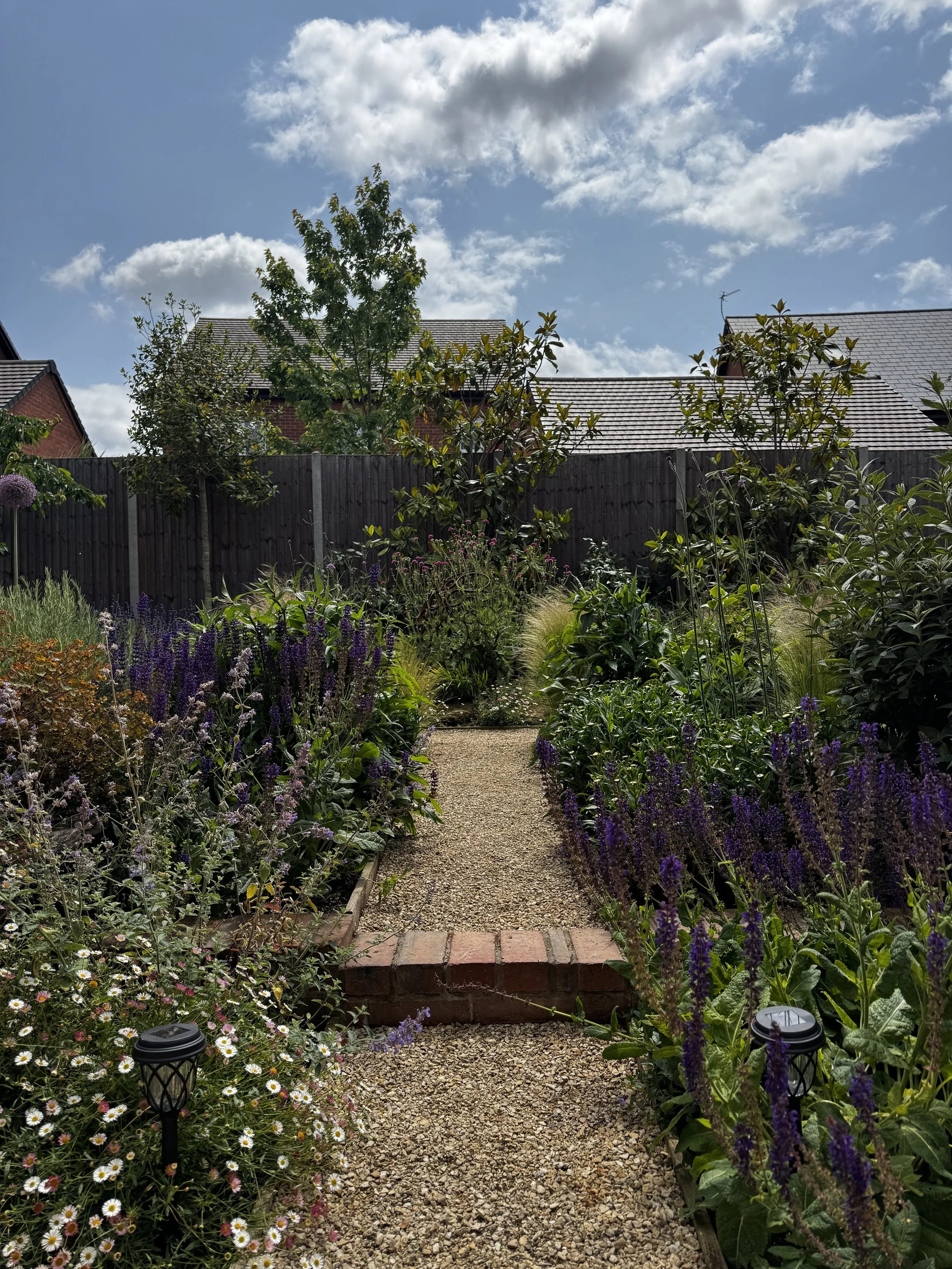
Evergreen plants retain their leaves through the year, providing colour, form and visual continuity in your garden regardless of season. Unlike deciduous plants, which shed their foliage in autumn and regrow it in spring, evergreens maintain their presence through winter. That quality becomes particularly valuable when the rest of the garden has died back.
In this article, we'll explore what distinguishes evergreen plants from other planting types and the role they play in garden design across different seasons. You’ll also find out how to choose and combine them effectively and some of the best-performing evergreens for gardens in the UK.
What makes a plant evergreen
Evergreen plants have adapted to retain their foliage year-round by producing leaves that can withstand cold, drought or low light rather than shedding them as a survival mechanism. The leaves are typically tougher and longer-lived than those of deciduous species, often with a waxy or leathery surface that reduces moisture loss.
Not all evergreens are the same:
Broadleaf evergreens such as Ilex (holly), Prunus laurocerasus (laurel) and Viburnum tinus carry wide, flat leaves similar in form to deciduous species.
Conifers such as Taxus (yew) and Chamaecyparis retain needles or scale-like foliage.
Grasses and grass-like plants including Carex and Liriope are technically evergreen but behave differently in the garden, providing texture and movement rather than bulk or opacity.
Semi-evergreen plants occupy a middle ground. They retain most of their foliage in mild winters but shed it in colder ones. Lonicera nitida and some Pittosporum species behave this way in the UK, where winter temperatures vary considerably from year to year. It's worth understanding this distinction when planning a planting scheme that depends on year-round cover.
The role of evergreens through the seasons
Evergreens earn their place most clearly in winter, when deciduous plants have shed their leaves and the garden can feel sparse or shapeless. A well-placed evergreen shrub or hedge holds the eye, defines space and gives the garden a sense of intention even on the bleakest January day.
In spring and summer, evergreens recede slightly in visual importance as deciduous plants come into growth and flower. Their role shifts from providing the main event to forming the backdrop. Think a dark yew hedging behind pale perennials or glossy Choisya foliage setting off adjacent planting. This supporting role is no less important for being less obvious.
Autumn is when the contrast between evergreen and deciduous planting becomes most vivid. As deciduous trees and shrubs colour and drop, the permanent green of evergreen foliage reads differently. It’s quieter and more constant against the seasonal drama around it. Thoughtfully combined, the two create a garden that changes through the year rather than simply closing down in October.
Related: Annuals in the Garden: What They Are and How to Use Them Well
Choosing evergreens: colour, form and texture
Colour
Evergreen foliage is far more varied than the word 'green' suggests. Leaf colour ranges from the deep near-black green of Taxus baccata to the bright acid tones of Choisya 'Sundance', the blue-grey of Festuca glauca and the variegated cream and green of Euonymus fortunei 'Emerald Gaiety'. Choosing evergreens for foliage colour produces planting schemes with considerably more winter interest.
Form
Form matters as much as colour:
Fastigiate (columnar) evergreens such as Taxus baccata 'Fastigiata' provide vertical punctuation.
Rounded forms like Pittosporum tenuifolium or clipped Ilex crenata create rhythm when repeated along a border or path.
Low spreading evergreens such as Euonymus fortunei or Vinca minor knit together at ground level and suppress weeds once established.
Matching form to the role the plant needs to play in the design is more reliable than choosing on colour alone.
Texture
Texture is the third variable. Fine-leaved evergreens such as Taxus, Ilex crenata or clipped Lonicera nitida have a dense, matt surface that reads well from a distance and clips cleanly. Broad-leaved evergreens like Fatsia japonica, Magnolia grandiflora or Viburnum rhytidophyllum have a coarser, more architectural quality that suits larger spaces or positions where bold contrast is the aim.
Evergreens as boundaries and screens
One of the most practical applications of evergreen planting is screening or zoning: creating privacy, blocking an unwanted view or defining the boundary of a space without resorting to a fence or wall. A well-grown evergreen hedge or mixed evergreen screen is typically more attractive than a hard boundary. It’s also more effective at absorbing sound and more valuable ecologically.
Taxus baccata (yew) is widely regarded as the finest hedging plant available in the UK. It clips to a tight, dense surface, tolerates hard cutting back into old wood, grows in sun or shade and is extraordinarily long-lived. Its reputation for slow growth is partly undeserved: established plants in good soil grow 30cm or more per year. However, it’s toxic to livestock, which is worth noting in rural settings.
Timing matters as much as technique when clipping hedges and evergreens, so our Garden Pruning Timer shows the right window to cut back yew, holly, box and more.
Ilex aquifolium (holly) is a strong alternative where wildlife value is a priority. It provides berries for birds in winter and its spiny foliage deters intruders. It also tolerates exposed or coastal conditions that yew would struggle with. Carpinus betulus (hornbeam) is technically deciduous but retains its dead brown leaves through winter, providing a similar degree of visual enclosure to an evergreen hedge at a lower cost per metre.
For mixed screens rather than formal hedges, combine evergreen shrubs of different heights and forms. Viburnum tinus, Osmanthus x burkwoodii, Eleagnus x ebbingei and Pittosporum tenuifolium work well together and provide flowers, fragrance and berries alongside year-round cover.
Evergreen planting in the context of the wider garden
The most effective use of evergreens isn't to fill a garden with them but to place them deliberately so that the garden reads well in every month of the year. A garden that is predominantly evergreen can feel static and heavy. It lacks the seasonal change and light that makes a garden feel alive. One with too few evergreens can feel bare and unresolved for four or five months of the year.
A useful working principle is to aim for roughly a third of the planting scheme to be evergreen. This is a guide rather than a rule. The right proportion depends on the character of the garden, the degree of winter visibility and what the space is being asked to do. A front garden seen from the street may benefit from a higher proportion of evergreen planting. A naturalistic meadow planting in a rural setting may need very little.
Combining evergreens with plants chosen for winter stem colour, seedheads or late berries extends the garden's seasonal range further. Cornus stems, Stipa grasses left uncut, Rosa hips and the skeletal forms of deciduous trees all contribute to a garden that has something to offer in January, not just June.
You can learn about more gardening terminology in our complete guide.
Ready to create a garden with year-round presence?
Evergreen planting is one of the foundations of a garden that performs well in every season. At Umber Garden Design, choosing the right evergreens for colour, form and placement is a central part of how we approach planting design and garden landscaping across Warwickshire.
Whether you're starting a new garden or looking to improve an existing scheme, we'd welcome the conversation. Contact us today to arrange a consultation with Mark Wright, or call 01926 754 049 or email hello@umbergardendesign.co.uk.