
The First Thing People See: Designing for Kerb Appeal
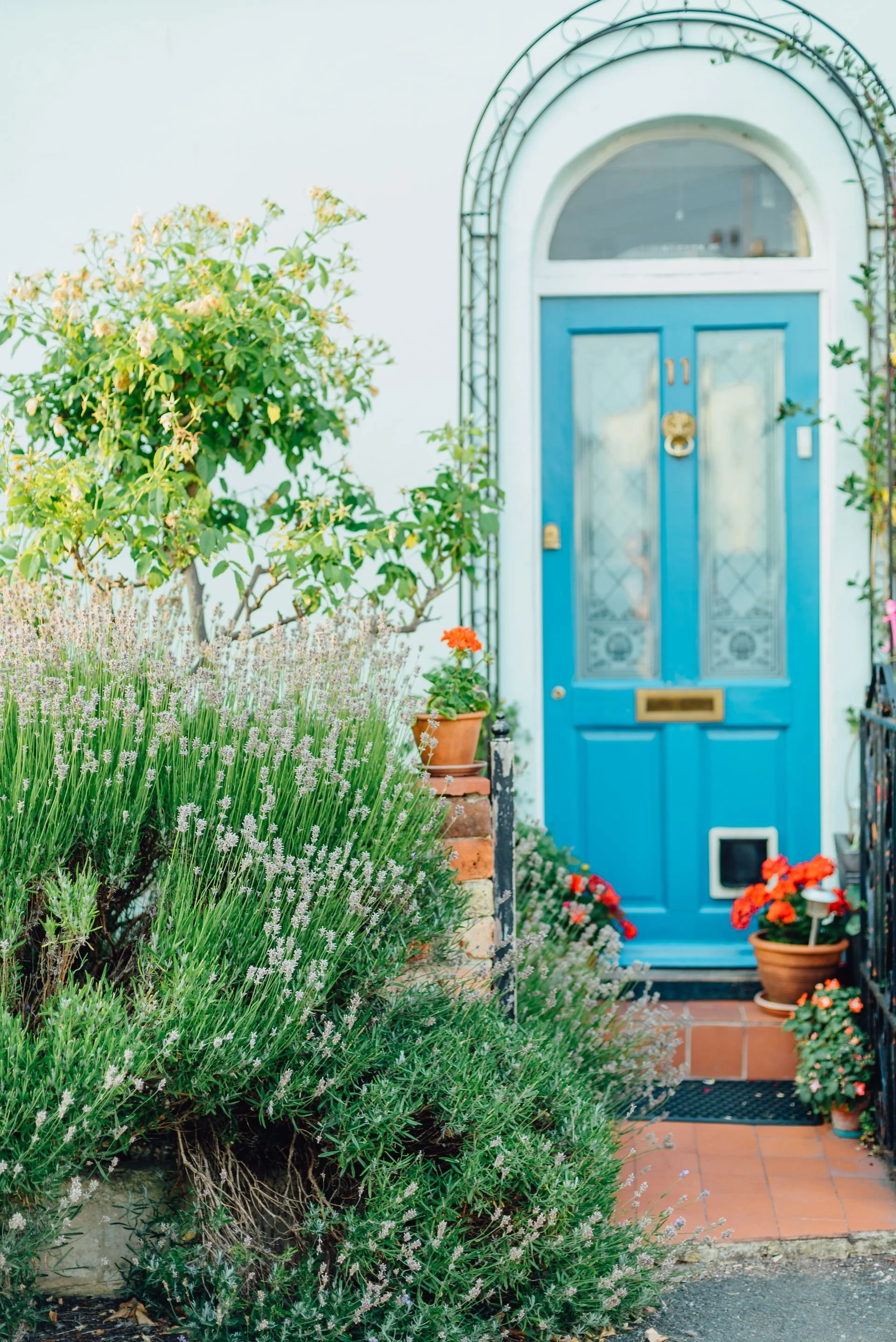
Kerb appeal is the impression a property makes before anyone reaches the front door. It's shaped by everything visible from the street or approach. So, the driveway surface, the planting, the boundary treatment and the lighting, plus the relationship between all of these elements and the house itself.
A well-considered front garden signals that the whole property has been thought about carefully. In this article, we'll explore what kerb appeal actually means in design terms and the key elements that contribute to it. We’ll also cover how to approach planting and materials for a front garden and what to consider if you're looking to improve your property's approach.
What kerb appeal actually means
Kerb appeal is sometimes treated as a purely aesthetic concern, something achieved with a lick of paint and a hanging basket. In practice, it's a design problem: how do you create a coherent, well-proportioned approach that feels right for the house, the street and the people who live there?
The challenge is that front gardens tend to be highly constrained spaces. They're often overlooked compared to rear gardens, squeezed between the road and the facade, subject to practical demands like parking and bin storage. Good design works within those constraints rather than ignoring them.
What distinguishes a genuinely well-designed front garden from one that simply looks tidy is intentionality. We’re talking about materials that relate to the architecture, planting that has been chosen for scale and season, and transitions between elements that feel resolved rather than accidental.
Structure and surfaces
The hard landscaping in a front garden sets the visual tone before any planting is considered. Driveway material, path alignment, steps, boundary walls and gates all contribute to the first impression and these elements tend to be permanent, so getting them right matters.
Material choice should be guided by the architecture. A Victorian or Edwardian property will usually read better with natural stone, brick or gravel than with block paving or tarmac. A more contemporary house may suit large-format porcelain or reinforced gravel with clean edging. The principle isn't slavish historical accuracy but visual coherence. In short, the materials of the approach should feel like they belong to the same conversation as the building.
Drainage is a practical consideration that also has design implications. Permeable surfaces are now required by planning regulations for driveways above a certain size, but they also offer design advantages. Gravel, permeable block paving and resin-bound aggregate all allow water to drain through rather than run off, reducing the risk of puddling and avoiding the need for additional drainage infrastructure.
Steps and level changes deserve particular attention. Where a garden steps up or down from the street, the design of that transition (the riser height, the tread material, the detailing at the edge) will be one of the first things a visitor notices and one of the most used elements of the whole approach.
Planting for the front garden
Planting in a front garden works differently from planting in a rear garden. It's seen from a distance, often at speed, and needs to read clearly from the street while also standing up to closer inspection from the path. It's also more exposed: to road pollution, to casual contact, and to the drying effects of hard surfaces and reflected heat.
Structure planting is the backbone of any good front garden scheme. Clipped evergreens, low hedging and architectural shrubs give the garden its shape through the year and prevent the space from looking bare in winter. Box has fallen from favour due to box blight, but alternatives like Ilex crenata, Euonymus or Pittosporum can perform a similar role with greater resilience.
Seasonal interest can be layered over the structural framework. Spring bulbs, summer perennials and autumn-berrying shrubs each contribute to the approach at different times of year. The front garden is often the part of a property most noticed by people outside the household, so designing for year-round performance, rather than a single peak season, is worth the effort.
Scale matters more in a small front garden than almost anywhere else. A tree that's appropriate for a large rear garden can overwhelm a modest front space and create shade, root pressure and maintenance problems that weren't considered at planting. Amelanchier, Prunus 'Spire' or a well-placed multi-stem Betula are all options that provide height and seasonal interest without dominating the approach.
Boundaries and enclosure
The way a front garden meets the street is one of its most defining characteristics. Boundary walls, railings, hedges and fences all establish the relationship between the private garden and the public realm, and that relationship shapes how the whole property reads from outside.
Low boundaries tend to read as open and generous while higher ones feel more private. Neither is inherently right. The appropriate level of enclosure depends on the character of the street, the style of the house and what the garden is being asked to do. A front garden that doubles as a seating area benefits from more enclosure than a purely ornamental approach.
Where a wall or fence already exists and is in good condition, working with it rather than replacing it is usually the better choice. A well-planted bed in front of an existing wall, or climbing plants trained across railings, can transform the appearance of a boundary without the cost and disruption of structural changes.
Gates and entrances deserve particular care. They're the point of transition from public to private and are often the most closely observed element of the whole approach. A gate that fits its setting (in terms of material, proportion and detailing) reinforces the overall impression. One that doesn't fit can undermine an otherwise well-considered scheme.
Lighting the approach
Lighting is the element most often overlooked in front garden design, despite the fact that for much of the year, many Brits arrive home after dark. A thoughtfully lit approach is both safer and more welcoming, and it extends the visual effect of the garden beyond daylight hours.
The most effective front garden lighting is low-key rather than floodlit. Path lights at a low level, uplighters to a key specimen or architectural feature, and well-placed downlights at the entrance all contribute to a composed night-time appearance without creating glare or light pollution.
Integral lighting can be built into steps, walls or raised beds at the design stage. It’s always more resolved than surface-mounted fittings added after the fact. Where a front garden is being designed or redesigned from scratch, it's worth considering the lighting scheme alongside the structure rather than as an afterthought.
Designing a front garden as part of the whole
The most successful front gardens are those designed as a considered part of the whole property rather than as a separate, secondary project. That means thinking about how the materials of the approach relate to the rear garden, how the planting palette connects with the wider scheme and how practical demands like parking and bins are resolved without compromising the design.
Kerb appeal isn't about making a property look impressive from the outside. It's about making it feel looked after, considered and genuinely lived in. The difference between a front garden that achieves this and one that doesn't is usually a matter of detail: the right material, a well-chosen plant in the right position, a boundary that fits its setting.
Where a front garden is being rethought as part of a wider project, it's worth treating the approach with the same level of care as any other part of the design. First impressions are made once and they inform everything that follows.
You can learn about more gardening terminology in our complete guide.
Ready to redesign your property's approach?
A well-designed front garden shapes how your property is seen and experienced from the moment of arrival. At Umber Garden Design, we approach the design and landscaping of front gardens with the same rigour we bring to every other part of a project: thinking carefully about structure, materials, planting and how the approach connects with the wider property.
Whether you're starting from scratch or looking to improve an existing front garden, we'd welcome the conversation. Contact us today to arrange a consultation with Mark Wright, or call 01926 754 049 or email hello@umbergardendesign.co.uk.