
Family Gardens: Designing Practical, Durable Spaces for Everyday Life
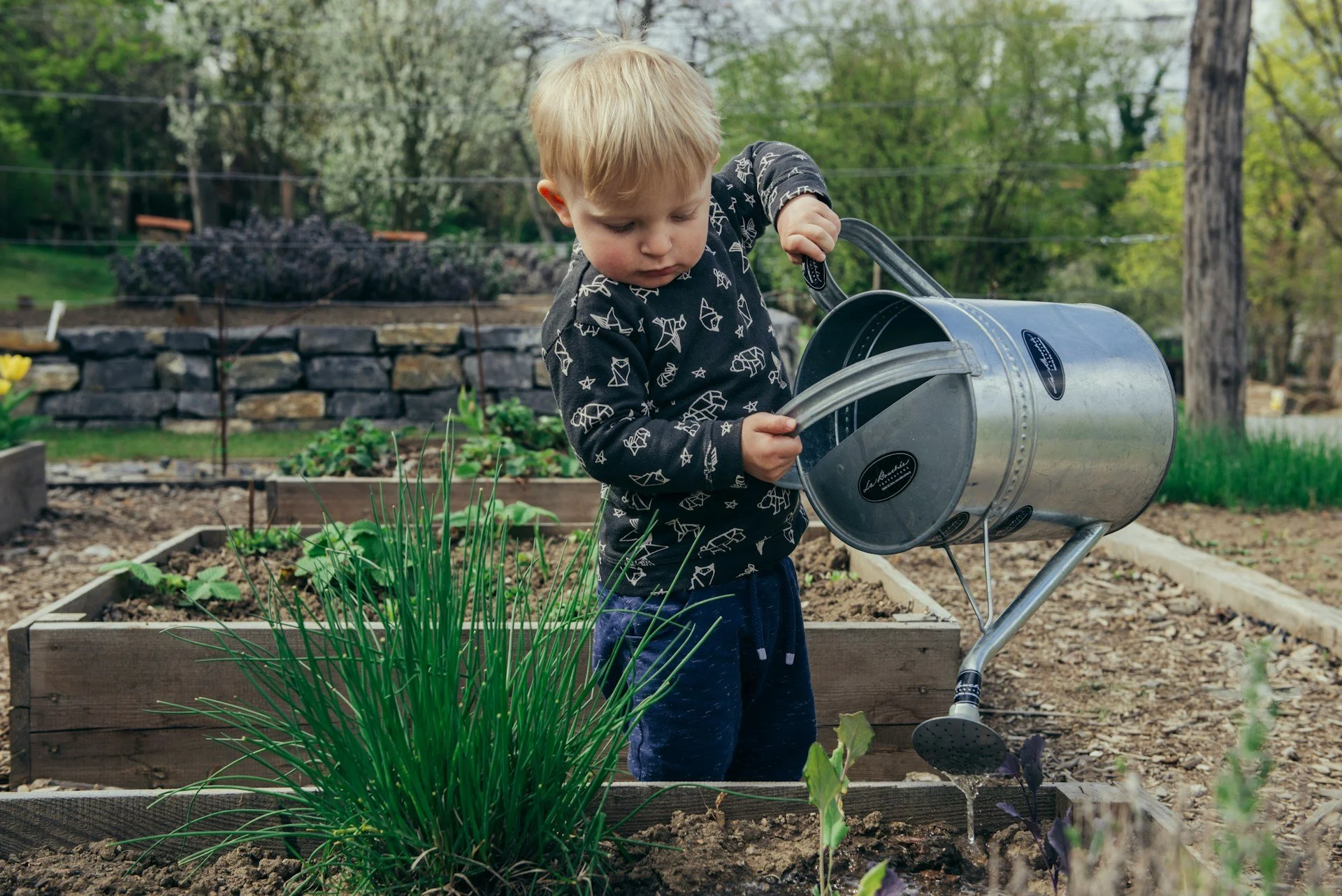
Family gardens are built around how people actually live. Unlike gardens designed primarily for visual impact, a well-designed family garden balances safety, durability and year-round usability with planting and materials that hold up under real daily use. The result is a space that works as hard as the household it belongs to, without sacrificing quality or longevity.
In this article, we'll explore the key principles of family garden design, from surface choices and layout to planting and safety considerations, plus how the garden can grow and adapt as children do.
What makes a family garden different
The defining characteristic of a family garden is that it needs to function across multiple uses at the same time. A terrace for outdoor dining sits adjacent to a lawn where children play. A planting border runs alongside a path that sees muddy boots and bicycle tyres daily. The garden needs to absorb all of this without constant repair or restriction.
This demands a different set of priorities from the outset. Surface durability, drainage, clear sightlines for supervision, and planting that bounces back from incidental damage all carry more weight than in gardens designed purely for aesthetics. The design challenge is to meet these requirements without producing a space that feels utilitarian or temporary.
Surfaces and hard landscaping
The choice of hard surfaces is one of the most consequential decisions in a family garden. Materials need to cope with heavy use and wet conditions with occasional impact. All while remaining attractive over time.
Natural stone
Natural stone paving is a strong choice for terraces and main paths. Firstly, it’s robust and ages well. A textured or riven finish also provides grip in wet weather, which smooth or polished surfaces don’t. Porcelain slabs can look appealing initially but they’re unforgiving underfoot when wet and show scuffs and chips more readily with heavy use.
Gravel
Gravel works well for secondary paths and transitional areas. It’s permeable and relatively forgiving if children fall, as well as being low cost to repair or extend. The main consideration is containment. Proper edging prevents gravel from migrating onto lawns and planted areas.
Lawn
Lawn remains the most practical surface for active play. The key is specification. Essentially, the right seed mix or turf variety for the soil type and drainage conditions will recover from wear far better than a generic lawn. Poor drainage is the most common cause of a lawn becoming unusable in winter, so it’s worth addressing at the construction stage rather than retrospectively.
Loose fill
For play areas, loose-fill surfaces such as wood chip or rubber crumb beneath any fixed equipment meet safety standards for fall impact and are straightforward to maintain. Hard surfaces beneath climbing frames or swings aren’t appropriate, regardless of the material.
Layout and zoning
A clear layout makes a family garden easier to use and easier to supervise. The most practical approach is to zone the garden by use. For example:
A hard-standing area immediately outside the house for everyday coming and going
An open lawn or activity space beyond
Planted areas framing the boundaries
This doesn’t need to feel rigid. You can make the layout feel considered rather than functional with paths that curve gently between zones, planting that softens transitions and levels that create natural separation between areas.
What matters is that each area has enough space to do its job properly. A terrace that’s too small for the family to eat outside comfortably undermines the whole design. As does a lawn that’s too narrow for children to play freely.
Sightlines are worth thinking about carefully. Aim for a garden where children can be seen from the kitchen or main living space without the adults needing to move. It reduces both anxiety and the number of times the space gets abandoned mid-use.
Planting for resilience and interest
Planting in a family garden should be chosen for robustness first. This doesn’t mean limiting the palette to a handful of tough shrubs. Many ornamental plants are far more resilient than they appear, and dense planting in borders reduces weed pressure and the need for ongoing intervention once established.
Grasses such as Calamagrostis and Deschampsia provide movement and seasonal interest without requiring much care. They’re hard to damage too.
Perennials including Echinacea, Rudbeckia and Nepeta recover well from contact and are attractive to pollinators throughout summer.
For shrubs, Cornus species offer multi-season interest and structural presence with considerable toughness.
Plants with serious thorns at low level are worth positioning with care in gardens where young children are present. This includes Rosa species used as ground cover or berberis in border edges.
The same applies to plants with toxic berries or sap. A quick review of the planting palette against a reliable toxicity reference is sensible at the design stage.
Dense, layered planting at the garden's boundaries also provides privacy, reduces noise from neighbouring properties and gives wildlife a foothold, all of which add long-term value to the space.
Safety without over-engineering
All too often, safety in a family garden can become focused on a series of add-on features. However, it’s largely a matter of sensible decision-making at the design stage.
Hard edges on raised structures, unguarded drops, poorly lit steps and surfaces that become slippery when wet are the most common hazards. And they’re are straightforward to design out. Good lighting on steps, changes in level and main paths extends the usability of the garden into the evenings and reduces trip hazards in low light.
Water features require particular attention. A pond brings significant ecological and sensory value to a garden, but an open pond with accessible edges is a genuine risk where young children are present. There are a few alternatives which introduce the character of water without the same level of risk:
Raised ponds with secure covers
Rill features with shallow channels
Dry stream beds that carry water only in heavy rain
Many families choose to defer an open pond until children are older, which is a reasonable approach.
A garden that grows with the family
A well-designed family garden shouldn’t need to be redesigned as children grow older. The underlying structure and planting can remain constant while the way the space is used evolves. A lawn that served as a play area becomes a space for outdoor dining and entertaining. A robust planted border matures and fills in. Surfaces that were chosen for durability continue to look well at ten or fifteen years.
The gardens that hold up best over this kind of timeframe are those built with honest materials and sufficient space in each zone, with planting chosen for long-term performance rather than immediate impact. Remember, a family garden is an investment in daily life, and the returns accumulate over years rather than seasons.
You can learn about more gardening terminology in our complete guide.
Ready to design a garden your family will actually use?
Designed well, a family garden is one of the most rewarding spaces a property can have. It’s practical enough for everyday life and attractive enough to be genuinely enjoyed. At Umber Garden Design, family gardens are a core part of our garden design and landscaping work across Warwickshire. We understand that no two families use their outdoor space in the same way, so we take time to understand how your household lives before shaping a design around it.
Whether you are starting from scratch or looking to rework an existing garden, we would be glad to help. Contact us today to arrange a consultation and discuss what a well-designed family garden could look like for your home.