
Stone, Block or Porcelain: Choosing the Right Paving for Your Garden
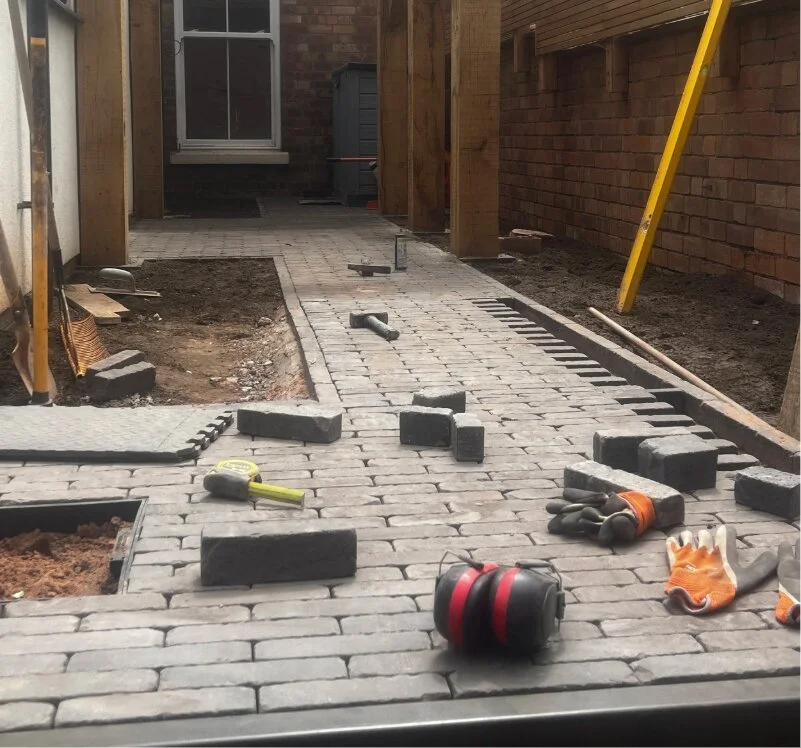
Paving is the hard surface a garden is built around. It’s the patio that holds furniture and gatherings or the route that connects one part of a garden to another. It needs to bear weight, resist weather and wear well for decades, all while setting the tone for everything planted around it.
In this article, we'll explore what paving needs to do well and the main materials available. You’ll also learn how the right choice differs between a patio and a path, and what installation and long-term maintenance actually involve.
What paving needs to do well
A patio and a path both fall under paving, but they carry different demands:
A patio needs to support furniture, foot traffic in all directions, and often outdoor cooking or dining, which means a flat, stable surface that stays level over time.
A path needs to guide movement clearly, drain well, and often cope with a narrower, more concentrated stream of foot traffic than a patio does.
Both need a properly built sub-base underneath. Paving that looks identical on day one can perform very differently after a few winters, depending on what's beneath it. Compaction, drainage and the mortar or jointing method all affect whether a surface stays flat or begins to shift, crack or pool water.
Types of paving materials
The material chosen affects appearance, cost, durability and how a surface ages, sometimes quite differently from how it looks when first laid.
Natural stone
Sandstone, limestone and granite are among the most commonly used natural stones in garden paving. Each has its own colour range, texture and durability, with granite generally the hardest wearing and limestone often the most porous. Natural stone tends to develop character over time. That includes subtle colour variation, lichen in shaded areas or a weathered look that many clients find preferable to a uniform finish.
Concrete block paving
Manufactured in consistent shapes and sizes, block paving is generally more affordable than natural stone and easier to lay with precision. It doesn't weather in quite the same way as natural stone, staying closer to its original colour and texture. This suits a cleaner, more contemporary look but appeals less to clients wanting a surface that ages visibly.
Porcelain
A dense, low-porosity material that resists staining, frost damage and algae growth better than most natural stones. Porcelain paving is often more expensive to buy but can work out comparable in whole-life cost given how little maintenance it needs. It's available in finishes that mimic natural stone closely, though it won't develop the same genuine variation over time.
Choosing paving for patios versus paths
A patio benefits from larger format slabs, which reduce the number of joints and give a cleaner, more open feel to a space meant for sitting and gathering. Slip resistance matters here too, particularly near water features or in shaded, damp areas that stay wet longer after rain.
Related: Family Gardens: Designing Practical, Durable Spaces for Everyday Life
A path generally works better with a narrower format or a mix of materials, since a path is experienced while moving rather than standing still. Textured or riven finishes suit paths well, giving grip underfoot without needing the very open, level surface a patio requires.
Jointing width and material also differ: patios often use tighter, mortared joints for a clean finish, while paths can suit looser, planted joints that let low growing plants soften the edges.
Installation and cost considerations
Cost varies considerably by material, format and how much groundwork a site needs before paving can begin. Natural stone generally sits at the higher end with porcelain close behind it. Concrete block paving is usually the most affordable per square metre, though ground preparation, drainage and edging can make up a significant share of the total cost regardless of which material is chosen.
Installation time also differs. Large format slabs and porcelain need a flat, well-prepared sub-base and careful jointing, which take longer to get right than smaller, more forgiving block paving. A specialist assessment of drainage and levels before work begins avoids costly adjustments later.
How paving ages over time
Paving is one of the longest-lasting elements in a garden, often outlasting several rounds of planting changes. So, it's worth choosing for how it will look in ten or twenty years, not just on installation day.
Natural stone tends to improve with age as it weathers and picks up moss and lichen in places, while porcelain stays close to its original appearance with minimal intervention. Block paving sits between the two, ageing gradually but rarely developing the same character as natural stone.
Maintenance needs also shift over time. Jointing may need repointing after a decade or more, natural stone can need occasional cleaning to manage algae in shaded spots, and porcelain generally needs the least attention of the three. Choosing a material that suits both the garden's style and the level of upkeep a client wants tends to matter more than upfront cost alone.
You can learn about more gardening terminology in our complete guide.
Choose the right paving for your garden
The right paving holds a garden together, giving patios and paths a surface that's stable, practical and suited to how the space is actually used. At Umber Garden Design, paving is one of the materials we work with across our garden design and landscaping services, chosen to fit each site's drainage, style and long-term maintenance needs.
Whether you're planning a new patio or reworking the paths through an existing garden, we'll work closely with you to choose a material that will still look right in twenty years. Contact us today to arrange a consultation.