
Framed, Not Enclosed: What a Pergola Adds to a Garden
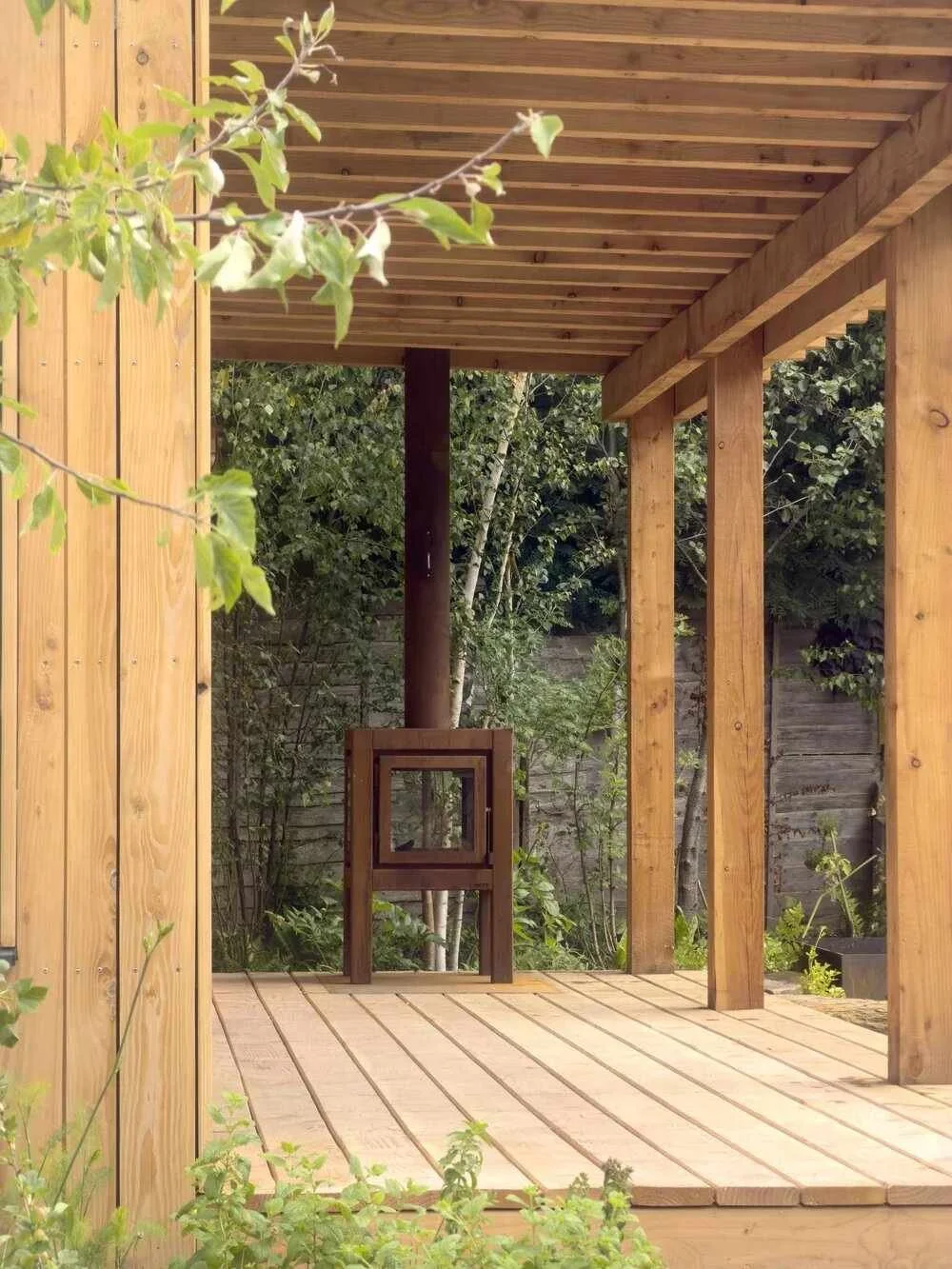
A pergola is an open-roof structure built to cast dappled shade and give climbing plants something to grow up and across. It’s typically a series of upright posts supporting a framework of beams or rafters. Unlike a gazebo or veranda, it doesn't fully enclose the space beneath it, so light and rain still reach through in varying degrees depending on how densely it's planted.
In this article, we'll explore what sets a pergola apart from other garden structures and the materials it's commonly built from. We’ll also cover how to choose climbers to grow through it and where it works best sited within a garden.
What a pergola actually does
A pergola's defining feature is its open roof. Where a gazebo or garden room provides full shelter from rain, a pergola offers partial shade that changes through the day and across the seasons. There’s more filtered light in spring before climbers leaf up and denser shade by midsummer once they've filled in.
This makes a pergola less about shelter in the strict sense and more about defining a space without closing it off. It marks a seating area, a dining spot or a transition point in a garden while keeping sightlines and airflow open. It’s this all-important balance that a fully roofed structure can't offer in the same way.
Materials for a pergola frame
The material a pergola is built from affects both its appearance and how much weight it can bear once climbers establish and mature.
Timber
The most traditional choice, and generally the best suited to supporting the eventual weight of dense climbing growth. Oak framing in particular produces a structure strong enough to carry a mature wisteria or climbing rose for decades, so long as it’s built using traditional joinery rather than fixings alone. It will age to a soft silver grey if left untreated.
Metal
Steel or wrought iron pergolas offer a slimmer profile than timber and suit a more contemporary garden. They're generally lower maintenance, though a well-built timber frame with proper joinery can match metal for durability while offering a warmer, more organic appearance.
Aluminium and composite
Lightweight and largely maintenance-free, these materials suit smaller structures or situations where minimal upkeep matters more than the character a timber frame develops with age. They tend to bear less weight than a well-built timber frame, which limits how densely a pergola can be planted over time.
Choosing climbers for a pergola
The climbers grown through a pergola do much of the work in how it eventually looks and feels, turning it into a real focal point. Wisteria is one of the most popular choices, producing dense, cascading growth and a strong structural frame over time. That said, it needs a robust support able to bear significant weight as it matures.
Climbing and rambling roses offer a lighter, more seasonal presence, with strong summer flowering but less coverage through winter. Clematis varieties can be chosen to flower at different points across the year, extending interest beyond a single season. Grape vines add both shade and a productive element, with foliage that colours attractively in autumn before dropping for winter.
Related: Planting Schemes: Plants That Belong Together
Design and siting considerations
Where a pergola sits matters as much as what it's built from. Positioned against a house, it can extend a living space outdoors and frame the transition between the two. Sited further into a garden, it can mark a destination, an outdoor kitchen or a point where one part of the garden gives way to another.
Don’t forget orientation
Orientation affects how useful the shade actually is. A pergola positioned to catch the lowest, harshest sun of the day tends to earn its place more than one sited for appearance alone. The frame also needs to be built with its eventual planting in mind. A structure that looks right on installation day but wasn't built to bear a mature wisteria's weight will need reinforcing or rebuilding within a few years.
How pergolas perform through the seasons
A pergola's character shifts noticeably across the year:
In summer, dense climbing growth casts full, leafy shade.
By autumn, deciduous climbers begin to thin and colour, letting more light through as the weather cools.
In winter, a bare timber frame becomes a structure in its own right, its joinery and proportions visible in a way that's hidden for most of the growing season.
This seasonal change is part of a pergola's appeal rather than a drawback. A well-built frame holds its own through winter, giving a garden structure and interest even when planting has died back. Then climbers return to soften it again as the year turns.
You can learn about more gardening terminology in our complete guide.
Add shade and structure to your garden
A pergola offers shade, structure and a framework for climbing plants without closing a garden off the way a fully roofed space would. At Umber Garden Design, pergolas are one of the structures we design and build in-house as part of our garden design and landscaping services, built to carry the weight of mature planting from the outset.
Whether you're looking to define a seating area or frame the approach to your garden, we'll work closely with you to design and build a pergola suited to your site and planting. Contact us today to arrange a consultation.