
Planted Once, Enjoyed for Years: A Guide to Perennials
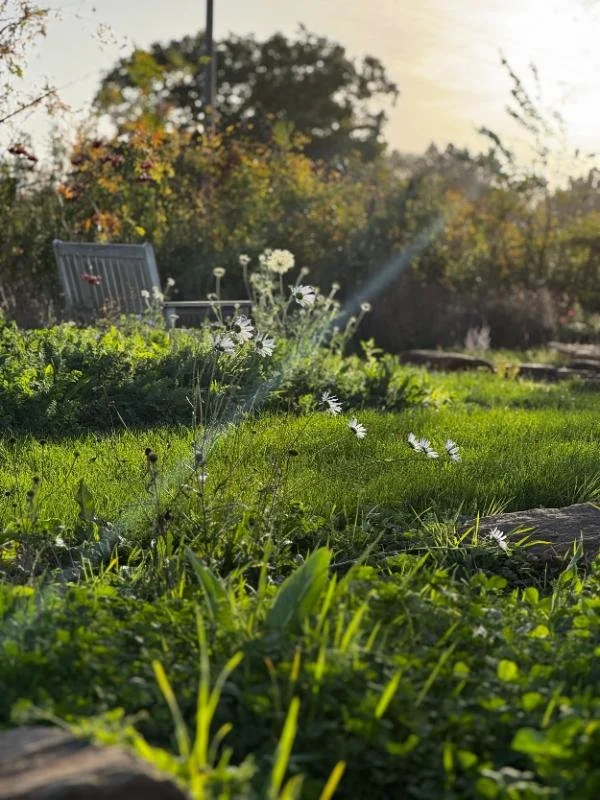
Perennials are plants that live for more than two years, returning each spring from the same roots. Once established, they form the backbone of most borders, flowering year after year without needing to be replanted.
Unlike annuals, which complete their life cycle in a single season, a well-chosen perennial can perform for a decade or more. In this article, we'll explore the main types of perennial, how to choose them for your soil and site, how to design with them and the care that keeps them performing.
What makes a plant a perennial
Most perennials share the same basic rhythm. They grow and flower through spring and summer, then die back or slow down in winter while the roots survive below ground. Within that pattern, there are a few distinct groups worth knowing.
Herbaceous perennials
Herbaceous perennials lose their leaves and stems in autumn and regrow from the crown each spring. This group includes many of the most familiar border plants, such as hardy geraniums, astrantia, echinacea and veronicastrum.
Evergreen perennials
Some perennials keep their foliage through winter. Hellebores, bergenia and epimedium all hold their leaves, giving low-level cover and interest when herbaceous plants have disappeared.
Short-lived perennials
A few perennials only last three or four years, including aquilegia, verbena bonariensis and gaura. They tend to self-seed freely, so they move around a border and replace themselves rather than staying in one place.
Choosing perennials for your soil and site
The most important decision is matching plants to conditions. A perennial planted in the wrong spot will struggle every year, while one in the right place will establish quickly and need little help.
Light comes first. Salvias, nepeta, eryngium and most ornamental grasses need full sun, while hellebores, brunnera, epimedium and ferns are suited to shade. Soil type matters just as much. Free-draining soils suit Mediterranean-style plants that dislike sitting wet in winter, while heavier ground like clay soil is better suited to robust, moisture-tolerant plants such as persicaria, rudbeckia, asters and hardy geraniums.
Hardiness is worth checking too. Most traditional border perennials are fully hardy in the Midlands, but some salvias and grasses from warmer climates need sharp drainage to survive a cold, wet winter.
Designing with perennials
Perennials look best planted in groups rather than as single specimens. Drifts of three, five or more of the same plant create bold blocks of colour and texture that read clearly from a distance. Repeating the same plants along a border gives it rhythm and stops it looking like a random collection.
Height and form need planning. Taller plants generally sit towards the back, but you can add depth and movement with a few airy, see-through perennials such as verbena bonariensis or tall grasses placed near the front. Contrasting shapes keep a scheme interesting too. Think spires of veronicastrum or salvia against the flat heads of achillea or the rounded domes of geraniums.
Successional flowering is what gives a border a long season. Choosing plants that peak at different times means one group takes over as another fades, so the border never runs out of interest from spring to autumn.
More naturalistic schemes take this further, mixing perennials and grasses closely together so they knit into a continuous layer of planting. This approach leaves little bare soil for weeds and gives a softer, meadow-like effect.
Related: Planting Schemes: Plants That Belong Together
Caring for perennials
Planting time makes a difference. Autumn and spring are the best seasons, when the soil is moist and warm enough for roots to establish before the stress of summer. Smaller plants, typically in 9cm or one-litre pots, often settle in faster than larger ones and quickly catch up. As a rough guide, most border perennials are planted at five to nine plants per square metre, depending on their eventual size.
Established perennials need less attention than many people expect. The main tasks are simple and largely seasonal.
Mulching in late winter or early spring to hold moisture and suppress weeds
Cutting back dead growth in late winter, once seed heads have finished providing interest
Staking tall or floppy plants early in the season, before they need it
Dividing congested clumps every three to five years to keep them vigorous
Many late-flowering perennials also respond well to the Chelsea chop, a technique named after the RHS Chelsea Flower Show in late May. Cutting stems back by about a third at this point produces shorter, sturdier plants that flower slightly later and rarely need staking.
Perennials through the seasons
A good perennial planting scheme changes noticeably through the year. Hellebores and pulmonaria open the season in late winter and early spring, followed by geraniums, astrantia and alliums in early summer. Late summer and autumn bring echinacea, rudbeckia, asters, sedums and grasses, which often provide the strongest colour of the year.
Winter can be just as rewarding. Leaving seed heads and stems standing gives structure and frost-catching texture, and it provides food and shelter for birds and insects. As plants mature, borders become fuller and more settled, so a perennial planting tends to look better in its third and fourth years than it did in its first.
You can learn about more gardening terminology in our complete guide.
Ready to plant a border that returns every year?
Perennials offer long-lasting colour and structure that improves with every season. At Umber Garden Design, perennial planting is at the heart of our garden design work, and we select every plant for the conditions, soil and character of each garden. We'll work closely with you to create a planting scheme that suits the way you use your garden and the level of care you want to give it.
Whether you're planning new borders or bringing tired ones back to life, we'll make sure every plant earns its place. Contact us today on 01926 754 049 or at hello@umbergardendesign.co.uk to arrange a consultation.