
Under Every Surface: What Aggregate Does in Garden Construction
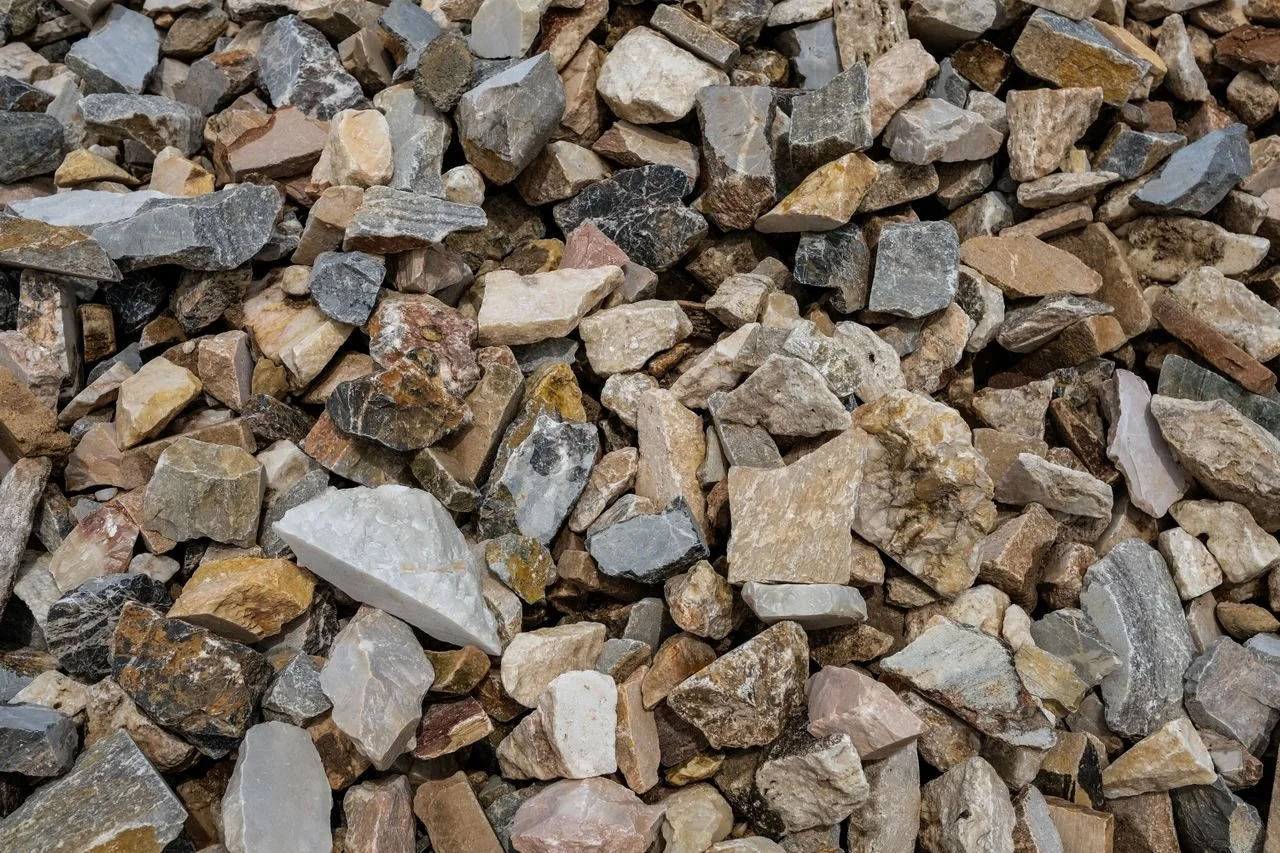
Aggregate is the umbrella term for the sand, gravel and crushed stone used throughout garden construction, mostly in places nobody sees once the work is finished.
It forms:
The compacted base beneath patios and paths
The free-draining layer that carries water away from planting and structures
In some cases, the visible finish itself
In this article, we'll explore what sets aggregate apart from a single material like gravel and the main types used in garden construction. We’ll also cover how it's used to build a stable base and its role in drainage.
A brief introduction to aggregate
Aggregate isn't one material. It's a category covering any granular stone or sand product that’s used to build, drain or finish a surface. It’s graded by particle size and shape. So, gravel is one type of aggregate, generally rounded or angular stone in the 2-to-20-millimetre range. But the term also covers sharp sand, crushed rock and blended sub-base products engineered specifically for compaction and load-bearing.
This distinction matters because most of the aggregate used on a garden project is never seen once construction is complete. A patio, path or driveway typically sits on 100 to 150 millimetres of compacted sub-base aggregate, doing the structural work that keeps the visible surface flat and stable for decades.
Aggregate as a structural base
The sub-base beneath a hard surface has to spread load evenly and resist movement from frost, water and traffic. Crushed stone products such as MOT Type 1 are the standard choice for this job in the UK. It’s a blend of graded crushed rock and fines that compacts to a dense, stable layer. MOT Type 1 is laid in compacted layers of consistent depth before paving or block work goes down on top.
Getting this layer wrong is one of the most common causes of paving failure. An inadequate or poorly compacted sub-base allows movement underneath, which shows up months or years later as:
Sunken slabs
Cracked jointing
Standing water where a surface should drain freely
The aggregate underneath is usually what determines whether a surface stays flat over time, rather than the paving itself.
Aggregate and drainage
Free-draining aggregate plays a central role in moving water away from where it isn't wanted. A French drain is a trench filled with clean, angular stone around a perforated pipe. And it relies entirely on the aggregate's ability to let water pass through quickly rather than pool.
Similar principles apply beneath permeable paving, where an open-graded sub-base allows rainwater to soak through the surface and disperse below ground rather than running off into drains.
Aggregate is also used to improve drainage around planting, particularly in heavy clay soils where roots can struggle in waterlogged ground. A layer of coarse grit or crushed stone dug into a planting hole or bed helps water move away from roots more quickly than the surrounding soil would allow on its own.
Types of aggregate used in garden construction
Different jobs call for different grades and materials, and choosing the wrong one for the job tends to show up as poor drainage or a surface that never fully compacts.
MOT Type 1
A crushed, graded stone blend designed specifically for sub-base compaction under paving, driveways and paths. Its mix of particle sizes locks together under compaction to form a dense, stable layer.
Sharp sand
Coarse, angular sand used as a bedding layer directly beneath block paving or flags, providing a level, adjustable surface for the units to sit on.
Pea shingle and decorative gravels
Rounded or angular stone used mainly as a visible finish rather than a structural material, though still requiring a properly prepared base beneath it to perform well.
Clean, angular drainage stone
Larger, sharply graded stone with minimal fines, used in French drains and soakaways where water needs to pass through quickly without the aggregate compacting solid.
Choosing the right aggregate for the job
The right aggregate for a project depends entirely on what it needs to do. That could be bearing load, moving water or simply looking right underfoot. Using a decorative gravel where a compacting sub-base is needed (or vice versa) is one of the more common and costly mistakes in garden construction, since the two are engineered for entirely different purposes despite sometimes looking similar.
Getting the base right at the outset also protects the investment made in the visible surface above it. Whether it’s structural or drainage-focused, a well-built aggregate base is largely maintenance-free once installed. That’s why it’s one of the more important (yet overlooked) decisions in any hard landscaping project.
You can learn about more gardening terminology in our complete guide.
Get the groundwork right in your garden
The aggregate beneath a garden's surfaces does as much to determine its long-term success as the materials on top. At Umber Garden Design, proper sub-base and drainage construction underpins our garden design and landscaping services, so patios, paths and planting all perform well for decades rather than just on installation day.
Whether you're planning new paving or addressing a drainage issue in an existing garden, we'll work closely with you to specify the right aggregate for the job. Contact us today to arrange a consultation.