
From Lawn to Hedgerow: Designing a Country Garden
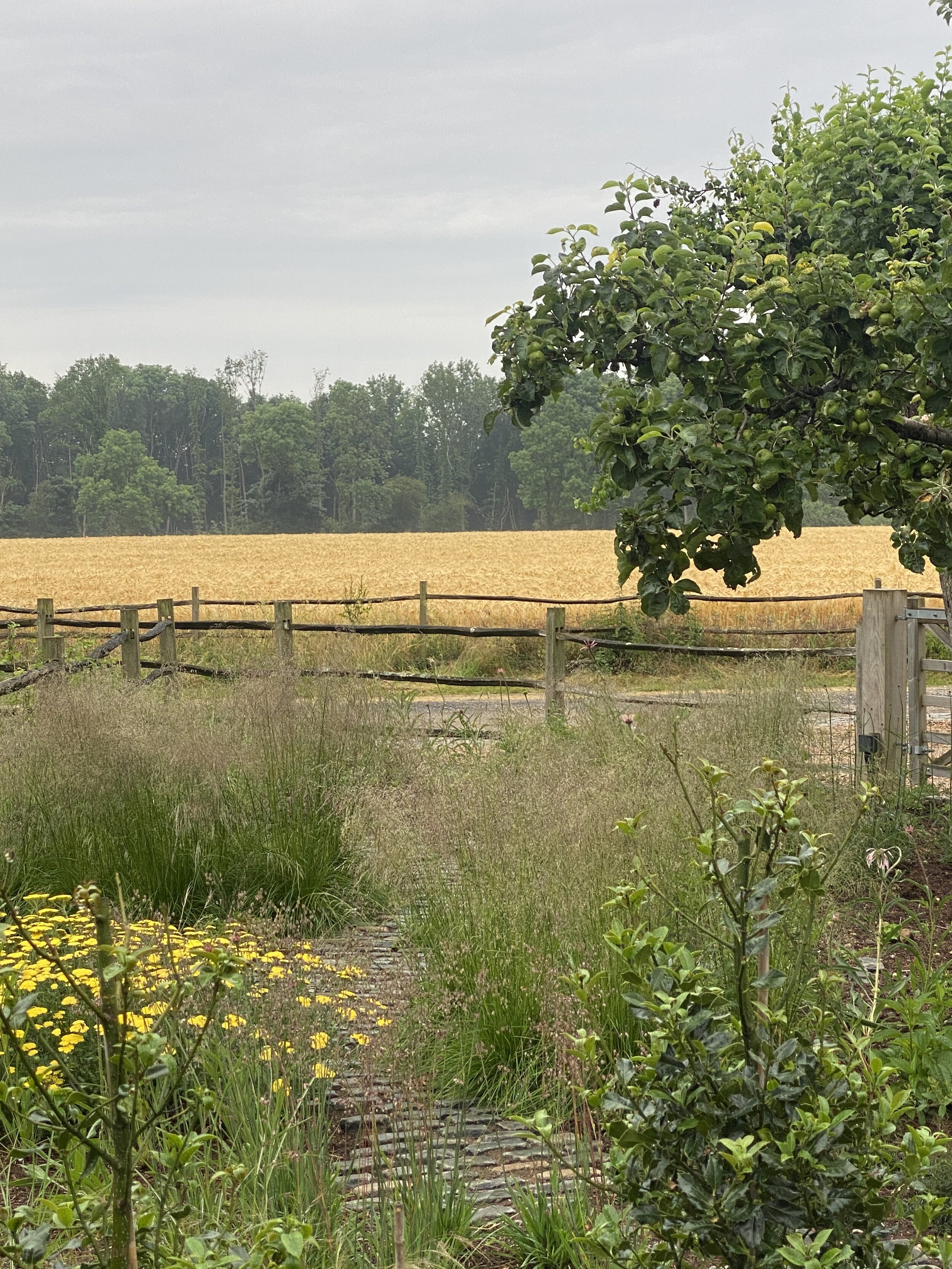
A country garden is a traditional, relaxed style built around open lawns and generous borders with natural materials. It has structure, but that structure is softened by planting. So, the garden feels settled and comfortable rather than formal or manicured.
The style suits larger plots and rural properties particularly well, where the garden can open out towards the surrounding countryside. In this article, we'll explore where the country garden comes from, its defining features, the planting and materials it relies on and how it performs through the year.
Origins of the country garden
The country garden grew out of the English country house tradition, but its relaxed character owes most to the late nineteenth century. William Robinson's ‘The Wild Garden’, published in 1870, argued for hardy plants grown naturally in place of the rigid bedding schemes popular at the time.
Gertrude Jekyll took the idea further, designing long herbaceous borders planted in drifts of colour and setting them against the clipped hedges and stone terraces of architects such as Edwin Lutyens.
That balance between firm structure and loose, generous planting still defines the style today. Far from a ‘wild garden’, a country garden is a carefully designed space that's been allowed to look at ease.
Related: Balance: Why Every Garden Needs Visual Equilibrium
Defining features of a country garden
Most country gardens share a recognisable set of elements, though the mix will vary with the size of the plot and the character of the house.
Open lawns that give the garden breathing space and a calm foreground to the borders
Deep mixed borders of perennials, shrubs and roses, planted in layers
Natural boundaries such as native hedgerows, drystone walls or post and rail fencing
Paths and terraces in stone, brick or gravel that sit comfortably with the house
Trees placed to frame views and give shade, often including fruit trees or a small orchard
The lawn does more work than it might first appear. In a country garden, it's the space that ties everything together, and it doesn't need to be immaculate. Areas of longer grass with mown paths and spring bulbs naturalised under trees are all in keeping with the style and reduce the time spent mowing.
Planting a country garden
Planting is where a country garden gets its relaxed character. Borders are typically deep, often three metres or more. That allows plants to be layered from low edging at the front to tall perennials and shrubs at the back. Plants are allowed to spill over path edges and lean into one another, which softens hard lines and gives the garden a gentle, established look.
Traditional choices include hardy geraniums, nepeta, alchemilla, salvias, foxgloves and achillea, with shrub roses, philadelphus and viburnum giving height and scent. Ornamental grasses add movement and hold their shape into winter. Native and wildlife-friendly plants sit naturally in the style, and a well-planted country garden can support a wide range of pollinators, birds and insects.
Structural planting holds the scheme together. Clipped yew or box alternatives, beech and hornbeam hedging and a few well-placed trees such as field maple, crab apple or amelanchier give the garden a framework that stays in place when the perennials die back.
Natural materials and boundaries
Materials in a country garden should look as though they belong to the place. Local stone, reclaimed brick, gravel and green oak all weather well and settle into the garden within a few seasons. In Warwickshire, that might mean Hornton stone, York stone paving or soft red brick that matches the house.
Timber plays a similar role. Oak pergolas, gates, benches and garden buildings suit the style well, and untreated oak silvers gently with age rather than needing regular staining. Hard surfaces work best kept simple. A gravel path edged in brick or a stone terrace laid in random sizes will look more at home than crisp, uniform paving.
Boundaries deserve the same care. A native hedgerow of hawthorn, hazel and field maple provides shelter and habitat, while a drystone wall offers a long-lasting edge that ages beautifully. Where a garden borders open fields, a low boundary lets the garden run visually into the countryside beyond.
Country gardens through the seasons
A well-designed country garden changes noticeably through the year. Spring brings bulbs in the grass and fresh growth in the borders, while early summer is the peak for roses and perennials. Late summer belongs to salvias, grasses and later-flowering perennials, and autumn adds colour from trees, hedging and fruit.
Winter is where the structure shows its value. Hedges, walls, paths and the outlines of trees carry the garden through the colder months, and leaving seed heads standing until early spring gives both texture and food for birds.
Maintenance is moderate rather than minimal. Borders need cutting back once a year and occasional dividing, and hedges need clipping, but a country garden doesn't call for the constant attention of a formal scheme.
You can learn about more gardening terminology in our complete guide.
Create your own country garden
A country garden offers space, softness and a strong connection to its surroundings. At Umber Garden Design, it's one of the styles we work with most often, bringing together garden design, landscaping and planting to create gardens that feel established from the start. We'll work closely with you to choose materials and plants that suit your house, your soil and the way you live.
Whether you're starting with a bare plot or reworking a mature garden, we'll make sure the result sits comfortably in its setting. Contact us today on 01926 754 049 or at hello@umbergardendesign.co.uk to arrange a consultation.