
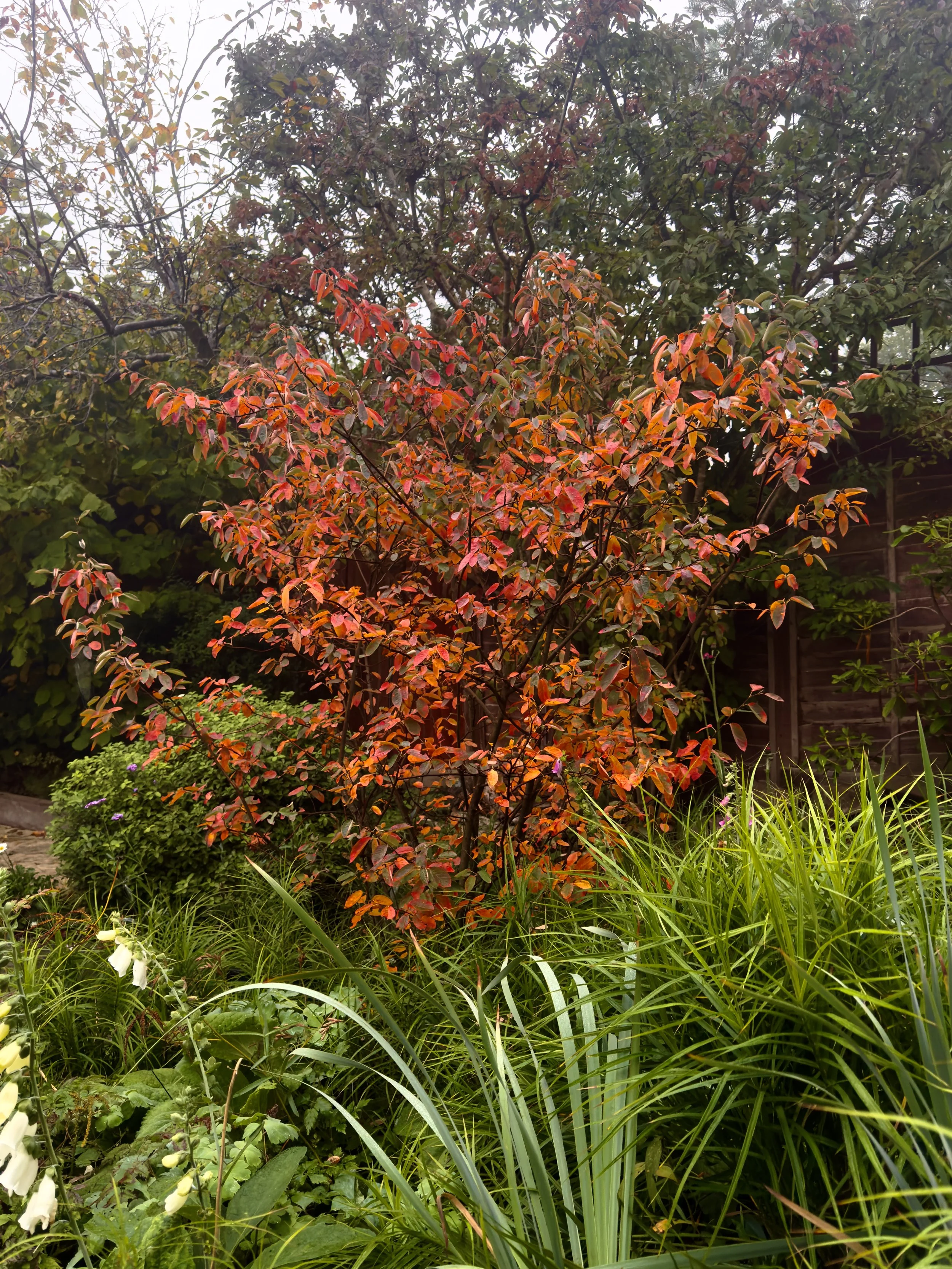
A year-round garden is designed to look good in every season, not just at the height of summer. It holds its shape through winter, unfolds steadily through spring and summer and finishes the year with colour and texture rather than bare soil.
Achieving this takes planning rather than luck. In this article, we'll explore the permanent framework a year-round garden depends on. We’ll discuss how planting is sequenced through the seasons and the role hard landscaping plays in keeping a garden attractive all year.
What makes a garden year-round
Most gardens peak in early summer and then fade. A year-round garden is designed so that something worthwhile is always happening, whether that's flowers, foliage, berries, bark or simply a strong outline against the frost.
This doesn't mean every part of the garden performs at once. Instead, the garden is planned as a sequence, with different plants and features taking the lead as the months pass. The aim is a garden you want to admire from the window in January as much as one you want to sit in during July.
A framework that holds through winter
Every year-round garden starts with structure. Structural plants give the garden its shape when herbaceous planting has died back. That includes hedges, clipped topiary and multi-stemmed trees. Without them, a winter garden can look flat and empty.
Evergreen planting does a lot of this work, but it's most effective when it’s used with restraint. Too many evergreens can make a garden feel static, as nothing changes from one month to the next. A balance of evergreen structure and deciduous planting gives the garden a consistent backbone while still allowing it to shift with the seasons.
Planning for succession
Succession planting is the practice of choosing plants that peak at different times. So, as one fades another takes over. Layered planting makes this easier, as bulbs, perennials, shrubs and trees each contribute at different heights and times of year.
Spring
Bulbs carry the early part of the year, from snowdrops and crocuses in late winter to daffodils, tulips and alliums as spring progresses. Flowering trees like cherries, magnolias and amelanchiers add height and blossom.
Summer
Herbaceous perennials and roses take over in summer, filling borders with colour and volume. Choosing varieties that flower in early, mid and late summer prevents the gap that often appears in July and August.
Autumn
Late-flowering perennials such as asters, sedums and rudbeckias extend the display into autumn, while trees and shrubs with strong autumn colour bring warmth as the days shorten. Ornamental grasses come into their own at this point, catching low light and moving in the wind.
Winter interest beyond evergreens
Winter is where a year-round garden proves itself, and evergreens are only part of the answer:
Coloured bark stands out sharply once leaves have fallen. For example, the white stems of birch or the peeling copper bark of paperbark maple.
Dogwoods and willows with red, orange or yellow stems bring colour at ground level.
Seedheads and grasses left standing through winter add texture and catch the frost.
Berries on shrubs such as holly, pyracantha and cotoneaster provide colour and food for birds.
Winter-flowering shrubs add scent at a time of year when it's least expected, including witch hazel and sarcococca.
Hard landscaping and features
Hard landscaping doesn't change with the seasons, which is exactly why it matters. Well-chosen paving, walls, steps and edging give the garden definition in winter and a sense of order throughout the year. Structures like a pergola or arbour provide height and form even when the climbers they support are bare.
Features that encourage use in colder months help too. Paths that stay firm and dry underfoot make it easier to walk the garden in winter, while lighting lets you enjoy it on dark evenings, picking out bark, sculpture or the shape of a specimen tree.
Keeping a garden interesting over time
A year-round garden needs the right maintenance as well as the right plants. Leaving perennials and grasses standing until late winter, rather than cutting everything back in autumn, preserves structure and supports biodiversity, giving insects shelter and birds a source of food.
As a garden matures, some plants will outgrow their space or fail to perform. Reviewing the planting scheme every few years and filling seasonal gaps as they appear keeps the garden balanced, so it continues to offer something in every month.
You can learn about more gardening terminology in our complete guide.
Ready to create a garden for every season?
A year-round garden gives you something to enjoy every month, from the first bulbs of spring to frost on winter seedheads. At Umber Garden Design, we plan structure and seasonal succession together as part of our garden design and planting work, so your garden never has an off-season.
Whether you're designing a new garden or adding interest to an existing one, we'll help it work in every season. Contact us today on 01926 754 049 or at hello@umbergardendesign.co.uk to start planning.